MEDDIC Qualification for Modern Sales Teams
MEDDIC has been around for decades, but it still holds up as a qualification framework, especially now that AI can help fill in the gaps faster.
A sales opportunity can look promising for months before anyone discovers the buyer has no approved budget, the decision-maker has never been involved, or the company has no clear purchasing process. By then, representatives may have spent hours in meetings, demonstrations, proposals, and follow-up that were unlikely to close.
MEDDIC qualification is designed to expose these weaknesses earlier. Rather than relying on a representative's general impression of an opportunity, it requires evidence about the buyer's expected outcomes, purchasing authority, evaluation criteria, decision process, underlying business problem, and internal support.
The framework originated in complex B2B selling, where purchase decisions often involve several stakeholders and extended evaluation cycles. Its principles remain relevant, especially when AI helps sales teams gather evidence, identify missing information, and review opportunities more consistently.
What each letter in MEDDIC actually stands for
MEDDIC consists of six qualification criteria. Each addresses a different source of risk in a sales opportunity.
M — Metrics
Metrics establish the measurable business outcomes the buyer expects from a purchase. These might include reduced operating costs, shorter processing times, increased revenue, or fewer errors.
A representative should understand the current baseline, the desired improvement, and how the buyer will judge the result. Without these details, a proposal may describe product capabilities without establishing a compelling reason to invest.
For example, a company considering sales automation might want to reduce the time representatives spend researching prospects. Quantifying that time and estimating the potential benefit helps establish whether the problem justifies a purchase.
E — Economic buyer
The economic buyer has the authority to approve the expenditure or ultimately authorize the purchase. This person may be the chief financial officer, a department head, or another executive, depending on the organization.
A representative who has built a strong relationship with an enthusiastic user may still lack access to the person controlling the budget. Identifying the economic buyer helps establish who must support the business case before the deal can proceed.
D — Decision criteria
Decision criteria are the requirements the buyer will use to evaluate potential solutions. They might include functionality, integration capabilities, security, implementation time, price, and expected return.
Understanding these criteria early allows the representative to address the requirements that matter rather than focusing on features the buyer does not prioritize.
D — Decision process
The decision process describes how the organization will evaluate options, reach agreement, and select a supplier. It includes the people involved, the approval stages, and the expected timing.
A prospect may express enthusiasm and still face several months of internal reviews. Understanding these steps makes it easier to forecast the opportunity realistically and prepare for potential delays.
I — Identify pain
This element establishes the business problem that makes a purchase worth considering. The representative must understand what is going wrong, who is affected, and what happens if the problem remains unresolved.
A vague desire to improve productivity is not enough. The salesperson needs to understand the practical consequences of the current situation and why the buyer might act.
C — Champion
A champion is an influential person within the prospective organization who actively supports the proposed solution and helps it move forward internally. They understand the problem, see the value of addressing it, and are willing to advocate for the purchase.
A friendly contact is not necessarily a champion. The representative needs evidence that the person can influence colleagues, explain the business case, and help navigate internal obstacles.
Together, these six elements provide a structured view of the opportunity. A deal with strong metrics and a compelling business problem may still be at risk if you can't access the economic buyer or don't understand how the decision will be made.
Why MEDDIC still holds up as a framework
MEDDIC remains useful because it addresses the information salespeople need to assess complex opportunities. A consistent qualification process makes it harder for enthusiasm, personal relationships, or optimistic assumptions to substitute for evidence.
The framework also connects qualification with forecasting. If representatives understand the buyer's requirements, purchasing authority, and decision process, managers have a stronger basis for estimating which deals are likely to progress.
This does not make MEDDIC a guarantee of success. A prospect may meet every qualification criterion and still choose a competitor, lose funding, or abandon the project. The framework helps identify and manage risks; it cannot eliminate them.
Its value becomes clearer when teams apply the same principles across the pipeline.
A representative should not classify a deal as healthy simply because a senior stakeholder attended a demonstration. Managers should be able to ask what measurable outcome the buyer expects, who controls the budget, and what needs to happen before approval.
Forbes' article on modern B2B sales strategies examines established selling approaches, including MEDDIC, and how structured qualification supports more focused sales activity. The important lesson is that qualification needs to guide actual decisions about opportunities rather than exist only as a field in the CRM.
MEDDIC also provides a useful common language for sales managers, representatives, and revenue operations. Everyone can discuss the same six areas when reviewing a deal, identifying risks, or deciding whether an opportunity is sufficiently developed to enter a later pipeline stage.
Where deals usually fail a MEDDIC check
The framework often exposes gaps that routine sales activity can easily miss.
A representative might know that a prospect is struggling with an existing system but have no evidence of the financial consequences. Without measurable outcomes, it becomes difficult to establish the value of a proposed solution or justify its cost.
In another case, the contact may be highly interested in purchasing but lack the authority to secure funding. The deal could stall when the budget holder becomes involved and questions the business case.
Other opportunities fail because the decision process remains unclear. The buyer may mention a preferred implementation date, but the representative has not established whether procurement, security reviews, or executive approval can be completed in time.
Common warning signs include:
- No quantified business outcome or agreed measure of success.
- Limited access to the economic buyer.
- Unclear or changing evaluation criteria.
- No confirmed decision process or realistic purchasing timeline.
- A business problem that lacks sufficient urgency.
- An enthusiastic contact who has not demonstrated the ability to influence the buying organization.
These gaps should prompt further discovery, not automatically disqualify every deal. For example, an economic buyer might not be available during initial conversations, but the representative should establish a credible path to reach them.
The same applies to champions. An internal supporter may be developing their influence rather than already holding it. The task is to understand what is missing and determine whether it can realistically be addressed.
MEDDIC is most useful when it gives the representative a practical next step. If the business case is weak, quantify the impact. If the decision process is unclear, ask the buyer to explain the approval stages. If the champion is untested, establish whether they can help secure access to other stakeholders.
Using AI research to fill MEDDIC gaps faster
MEDDIC requires detailed information, and collecting it can be time-consuming. Representatives must review notes, analyze conversations, research accounts, and update CRM records while managing their active opportunities.
AI can reduce some of this administrative work by organizing existing evidence and highlighting unanswered questions. Its role is to support qualification, not to invent information that the buyer has not confirmed.
Consider how AI can contribute to each element.
- Metrics: AI can extract stated business objectives and quantitative targets from call transcripts, meeting notes, and emails. It can flag opportunities where the proposed outcome is described vaguely or lacks a measurable baseline.
- Economic buyer: Account research and CRM records can help identify likely budget holders and relevant executives. However, a job title does not prove spending authority for a specific purchase. Representatives still need to validate the person's role in the decision.
- Decision criteria: AI can summarize requirements expressed across conversations and identify recurring concerns about functionality, price, integration, or security. This helps representatives prepare relevant follow-up questions.
- Decision process: Systems can extract mentioned deadlines, approval stages, and procurement requirements from meeting notes. Missing steps can then be flagged for clarification.
- Identify pain: AI can organize descriptions of business problems, their consequences, and the people affected. Representatives should verify that the summary reflects the buyer's actual priorities rather than an interpretation presented as fact.
- Champion: AI can help identify contacts who consistently support the proposed solution, arrange access to other stakeholders, or provide information about internal requirements. A genuine champion still requires human judgment.
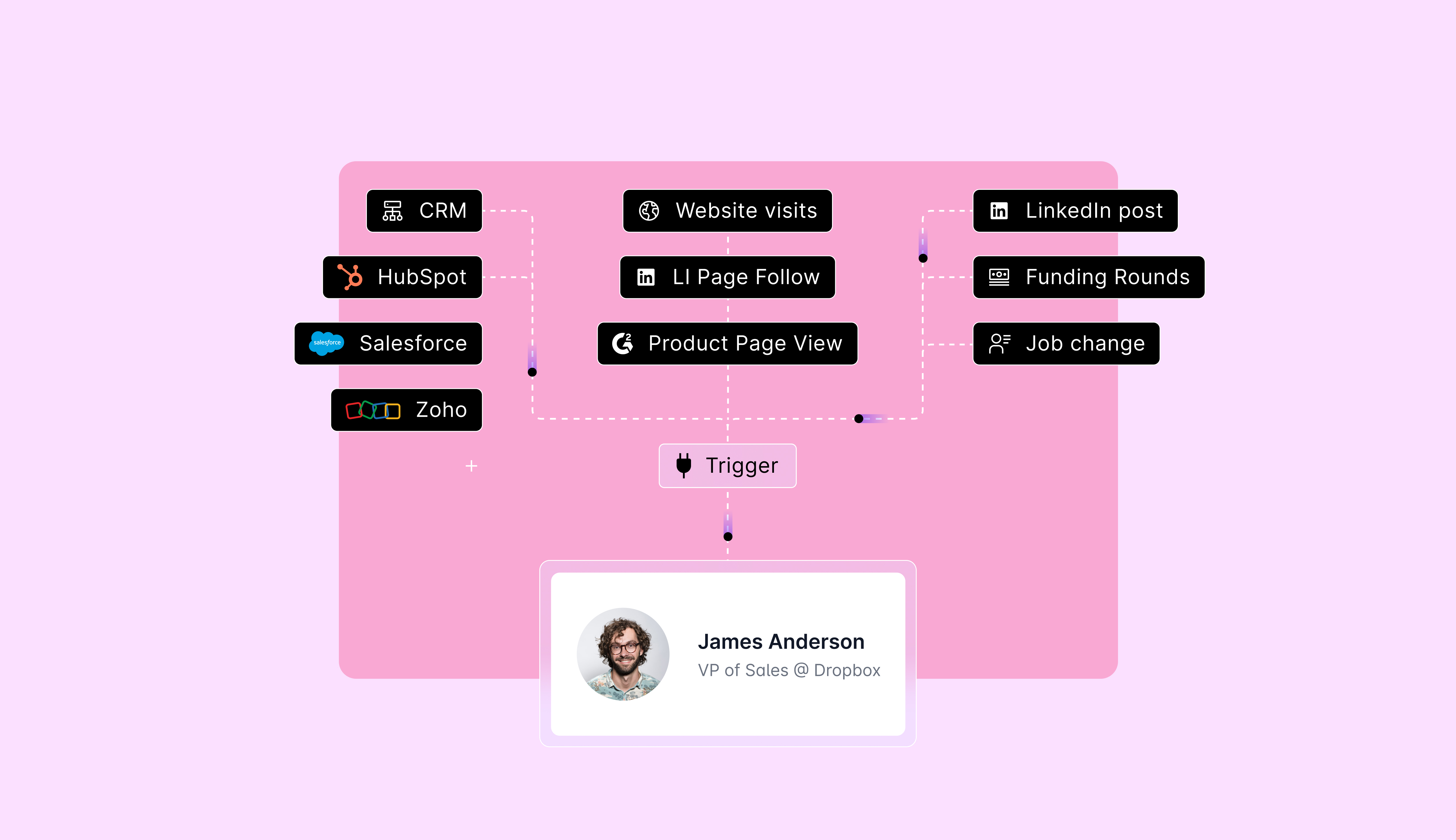
Alta's AI Growth Agent connects CRM information and external data signals to identify patterns and surface potential opportunities. These capabilities can help qualification teams find relevant evidence across connected data sources instead of relying entirely on manual record reviews.
Alta's guide to AI-driven sales acceleration also explores how AI-assisted research can inform prioritization and outreach. For MEDDIC, the same analytical capabilities help you prepare for discovery and identify gaps before a deal advances.
The distinction between evidence and inference is essential. AI may identify a likely economic buyer, but it should not mark that person as confirmed without supporting information. A transcript may mention a budget, but that does not necessarily mean funding has been approved.
Qualification systems should identify what is known, what remains uncertain, and what the representative needs to ask next.
Applying MEDDIC without turning it into a checklist
MEDDIC becomes less useful when representatives complete six CRM fields simply to satisfy a manager's reporting requirements. A fully populated record can still contain weak assumptions, outdated information, or answers that do not reflect the buyer's actual position.
The framework should guide discovery and deal reviews rather than become an administrative exercise.
Start by introducing the criteria naturally into sales conversations. Questions about the buyer's desired outcomes, evaluation requirements, approval process, and internal priorities should arise from an understanding of their problem. They should not feel like a rigid questionnaire delivered in a single meeting.
Qualification should also develop throughout the sales cycle. A representative may establish the business problem during discovery, clarify decision criteria during a demonstration, and identify the economic buyer during commercial discussions. Different elements become clearer at different stages.
Managers can reinforce this process by asking evidence-based questions during pipeline reviews. Instead of asking whether a deal is MEDDIC-qualified, they can ask what measurable outcome the buyer expects and what evidence supports the estimated closing date.
CRM implementation should make this information easy to find. Each criterion needs a clear definition, an appropriate field or record, and guidance about what counts as sufficient evidence. AI-generated summaries should be distinguishable from information confirmed directly by the buyer.
A useful approach is to record each element as confirmed, partially established, or missing. This makes uncertainty visible and helps managers identify where coaching or further discovery would be most valuable.
Finally, measure whether qualification discipline improves actual results. Compare win rates, forecasting accuracy, deal slippage, and sales-cycle duration across opportunities with different levels of MEDDIC completeness. Review the findings by deal size and sales segment rather than assuming that one set of rules will suit every opportunity.
The objective is not to achieve a perfect score. It is to develop a more accurate understanding of which deals are viable, which need further discovery, and which are unlikely to close.
Keep MEDDIC focused on evidence
MEDDIC remains valuable because it encourages sales teams to examine the factors that determine whether a deal can realistically close. Its effectiveness depends on the quality of the information collected and the willingness to act when important answers are missing.
AI can make the framework easier to apply across a large pipeline by organizing information, highlighting gaps, and reducing the time required for routine analysis. Representatives still need to verify that evidence, ask difficult questions, and understand the people and decisions behind each opportunity.
Used well, MEDDIC becomes more than a qualification score. It gives sales teams a consistent way to understand risk, improve forecasts, and concentrate effort on deals with a credible path to success.
Frequently Asked Questions
No. MEDDIC is particularly useful for complex B2B sales involving several stakeholders, meaningful investment, and lengthy approval processes. Smaller sales teams can also benefit from its principles, although they may use a lighter implementation to avoid adding unnecessary administrative work to simpler transactions.
BANT evaluates Budget, Authority, Need, and Timeline. It provides a relatively simple structure for determining whether a prospect has the basic conditions required to buy. MEDDIC examines six areas in greater depth, including measurable outcomes, decision criteria, the decision process, business pain, and internal champions. The latter is more suitable when purchasing decisions involve multiple stakeholders and approval stages.
Yes. A CRM can capture the six criteria, calculate a qualification score, flag missing information, and trigger reviews when an opportunity advances stages. AI can help extract evidence from conversations and suggest follow-up questions. The system should distinguish confirmed facts from inferred information and allow representatives or managers to challenge inaccurate assessments.