AI vs Human: Where to Draw the Line in Your Sales Org

AI can now run prospecting, outreach, and scheduling end-to-end. Here’s a practical way to decide what still belongs with a human rep.
Sales organizations face a different staffing question than they did a few years ago. AI can research prospects, personalize outreach, qualify inbound leads, schedule meetings, and update CRM records with limited manual input. Tasks that once required several hours of a sales development representative's day can now be handled by automated systems.
But the ability to automate a task does not establish that doing so will produce the best sales outcome. A system can follow a qualification framework consistently while missing an important concern in a buyer's response. It can prepare a detailed account brief without knowing which question will persuade a skeptical executive to reconsider a decision.
The challenge is deciding where automation creates value and where a person's judgment changes the result. That decision should determine how a sales organization allocates work, assigns responsibility, and measures performance.
What AI reliably handles well today
AI performs well when a task involves repeatable actions, clearly defined objectives, accessible information, and outcomes that can be evaluated consistently. These conditions are common in sales operations, particularly at the top of the funnel.
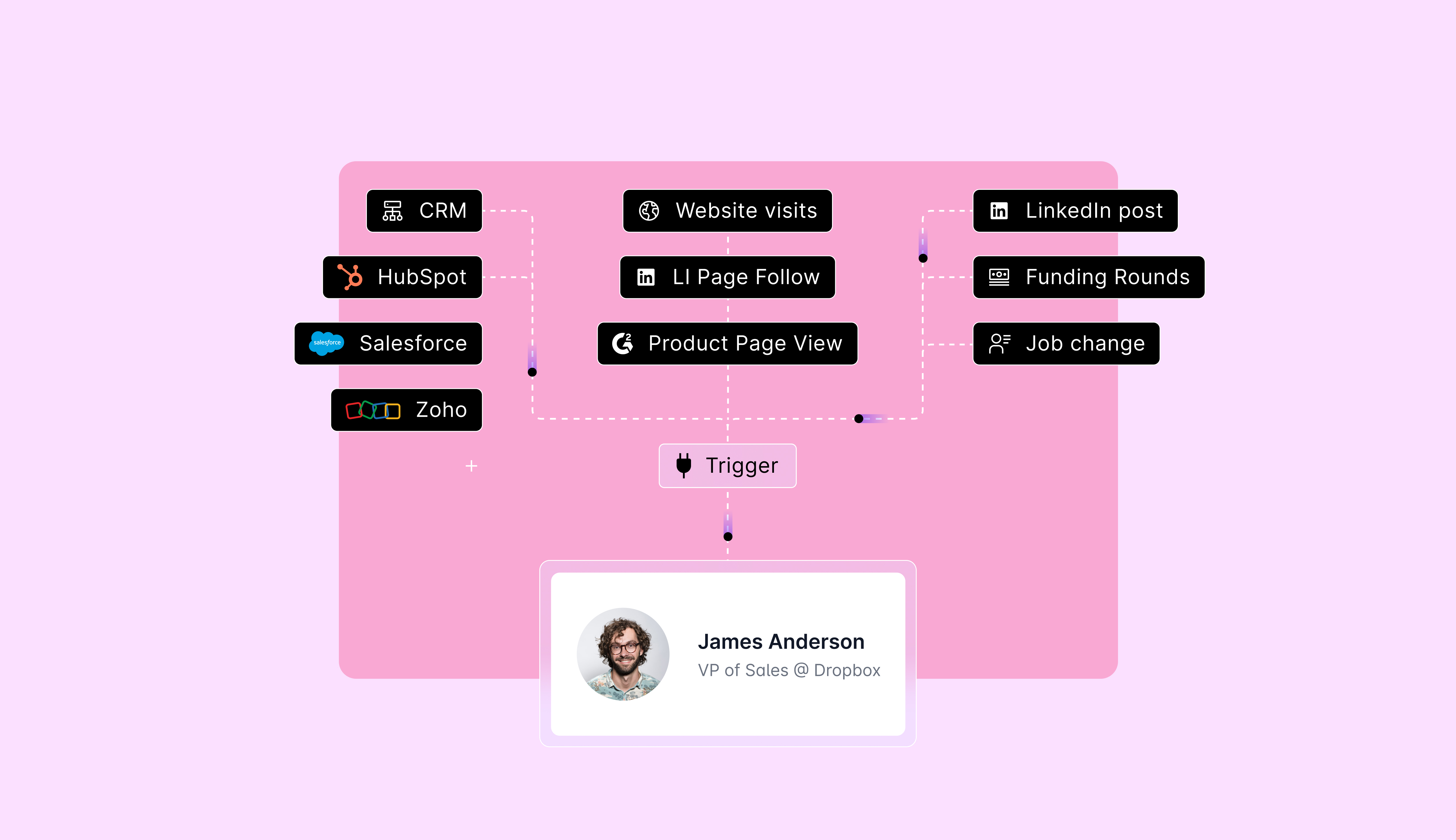
Prospect research is one example. An AI agent can gather company information, examine relevant business developments, identify potential contacts, and compare accounts against an ideal customer profile. A representative can then review the results instead of researching every company from scratch.
Outreach is another suitable area. AI can draft messages from CRM data, manage follow-up sequences, respond to routine inquiries, and schedule meetings based on defined rules. It can also update records after an interaction, reducing the administrative work associated with each prospect.
Inbound qualification offers a similar opportunity. When a prospect requests information, an AI agent can ask predefined questions, establish whether basic requirements are met, and route the inquiry to the appropriate representative.
Tasks particularly suited to AI include:
- Research and enrichment: Collecting company details, identifying relevant contacts, and summarizing account history.
- Routine outreach: Preparing personalized messages and managing approved follow-up sequences.
- Initial qualification: Asking standard questions, checking requirements, and routing suitable leads.
- Scheduling and reminders: Finding available meeting times, confirming appointments, and following up on missed meetings.
- CRM administration: Recording interactions, updating fields, and flagging incomplete information.
- Performance analysis: Summarizing campaign results, identifying patterns, and highlighting areas for review.
These tasks share an important characteristic: the organization can define what good execution looks like and check whether the system has followed the rules.
Alta's guide to choosing AI sales agents examines different agent types and their intended roles across sales workflows. The useful distinction is between automating a discrete task and delegating an entire process. The latter requires clear permissions, reliable data, and rules for handling situations that fall outside the expected pattern.
AI should take on more responsibility as the organization demonstrates that it can complete the work reliably, not simply because the task appears repetitive.
Where human judgment still changes outcomes
Sales conversations rarely follow a perfectly predictable sequence. Buyers have competing priorities, internal disagreements, financial constraints, and concerns that may not appear in a CRM record or qualification form.
Human representatives contribute value when the next step depends on interpreting this context rather than simply applying a rule.
Discovery is a clear example. A prospect may initially request a product demonstration because they believe they need a specific feature. A skilled representative can ask questions that reveal the underlying business problem, assess its consequences, and determine whether the proposed solution addresses it.
That requires more than gathering information. The representative must decide which questions to ask, recognize when an assumption is wrong, and adapt the conversation as new information emerges.
Complex negotiations present similar challenges. Buyers may agree that a product meets their technical requirements while disagreeing internally about cost, implementation risk, or purchase timing. A representative needs to understand these competing concerns and negotiate a path forward without damaging the relationship.
Human involvement is particularly valuable in the following situations:
- Executive conversations. Senior buyers often want a commercial argument tailored to their business priorities. A representative must connect product capabilities to financial outcomes, organizational constraints, and strategic commitments.
- Multi-stakeholder decisions. Different members of a buying committee may have conflicting objectives. Someone needs to identify those differences, build agreement, and establish who must approve the purchase.
- Unexpected objections. A prospect may raise a concern that does not fit the qualification framework. A human can investigate the underlying issue and decide whether to change the proposal, involve a specialist, or disqualify the opportunity.
- High-stakes commitments. Pricing concessions, contractual terms, implementation promises, and unusual requirements can create obligations that extend beyond the immediate sale. These decisions need accountable human oversight.
- Relationship repair. When a customer loses confidence or a sensitive disagreement develops, the ability to listen, take responsibility, and make a considered commitment matters more than response speed.
A Forbes Business Development Council article on the judgment gap examines why AI-generated research and preparation don't automatically translate into better decisions in complex B2B sales. The distinction matters: giving a representative more information doesn't guarantee they will interpret it correctly or use it effectively in a live conversation.
The goal should therefore be to give humans better preparation and more time for consequential conversations, not remove them from those conversations altogether.
Tasks that look automatable but aren't yet
Some sales activities appear repetitive until the surrounding context is considered.
Objection handling, for example, can look like a classification problem. An AI system identifies a price objection and generates a standard response. That may work when a prospect requests routine clarification. But saying the product is too expensive could mean several things: the budget is fixed, the expected return is unclear, a competitor has offered better terms, or the buyer doesn't see enough value to justify the purchase.
Each interpretation calls for a different response. Automatically offering a discount could sacrifice margin without addressing the real concern.
Lead qualification has a similar limitation. A prospect may meet every formal requirement while lacking the internal support or purchasing authority needed to move forward. Another may fall short of a standard score but have a compelling use case and an executive sponsor.
AI can flag these cases, summarize the available evidence, and recommend questions. Final decisions may still require a representative who understands the commercial context.
Personalization also becomes less straightforward as deal complexity increases. AI can tailor a message to a person's job title, company announcements, and previous interactions. But accurate personalization is not the same as a useful sales conversation. Referencing an executive's recent announcement adds little value if the representative cannot explain how the proposed solution relates to the underlying business issue.
Alta's article on AI-driven customer engagement discusses how context can inform the timing and content of outreach. For sales organizations, the practical implication is that automation should use relevant information to improve interactions, rather than simply producing more messages.
A sensible dividing line is to let AI handle preparation, standard execution, and defined decisions while escalating ambiguity, unusual commitments, and high-consequence choices to people.
Designing a sales org around this split
A hybrid sales organization should be designed around ownership of outcomes rather than a list of tasks assigned to machines and employees.
Start by mapping the current sales process. Identify the work performed at each stage, the people responsible, the decisions required, and the points where delays or inconsistencies occur.
Then assess each activity against four questions:
- Can the task be described through clear rules and reliable inputs?
- Can the system recognize when its output is incorrect or uncertain?
- What is the cost of making a mistake?
- Would human involvement materially improve the outcome?
Research, routine scheduling, and standard record updates will often score well for automation. Complex discovery and commercial negotiations will usually justify more human involvement.
Next, establish explicit handoffs. If an AI agent qualifies a lead, the receiving representative should know what the prospect needs, which questions have been answered, what concerns have emerged, and why the lead was passed along.
Without this context, the prospect may have to repeat information, and the organization loses much of the value automation generates.
Alta's AI inbound agent illustrates how routine inbound qualification can be handled before a human representative takes over. An effective handoff should preserve the conversation history and identify what still needs attention, rather than simply creating a meeting in the calendar.
Ownership must also remain clear. A human manager or designated operations owner should own qualification rules, quality monitoring, escalation policies, and changes to automated workflows. AI can execute the process, but the organization remains responsible for its decisions and their consequences.
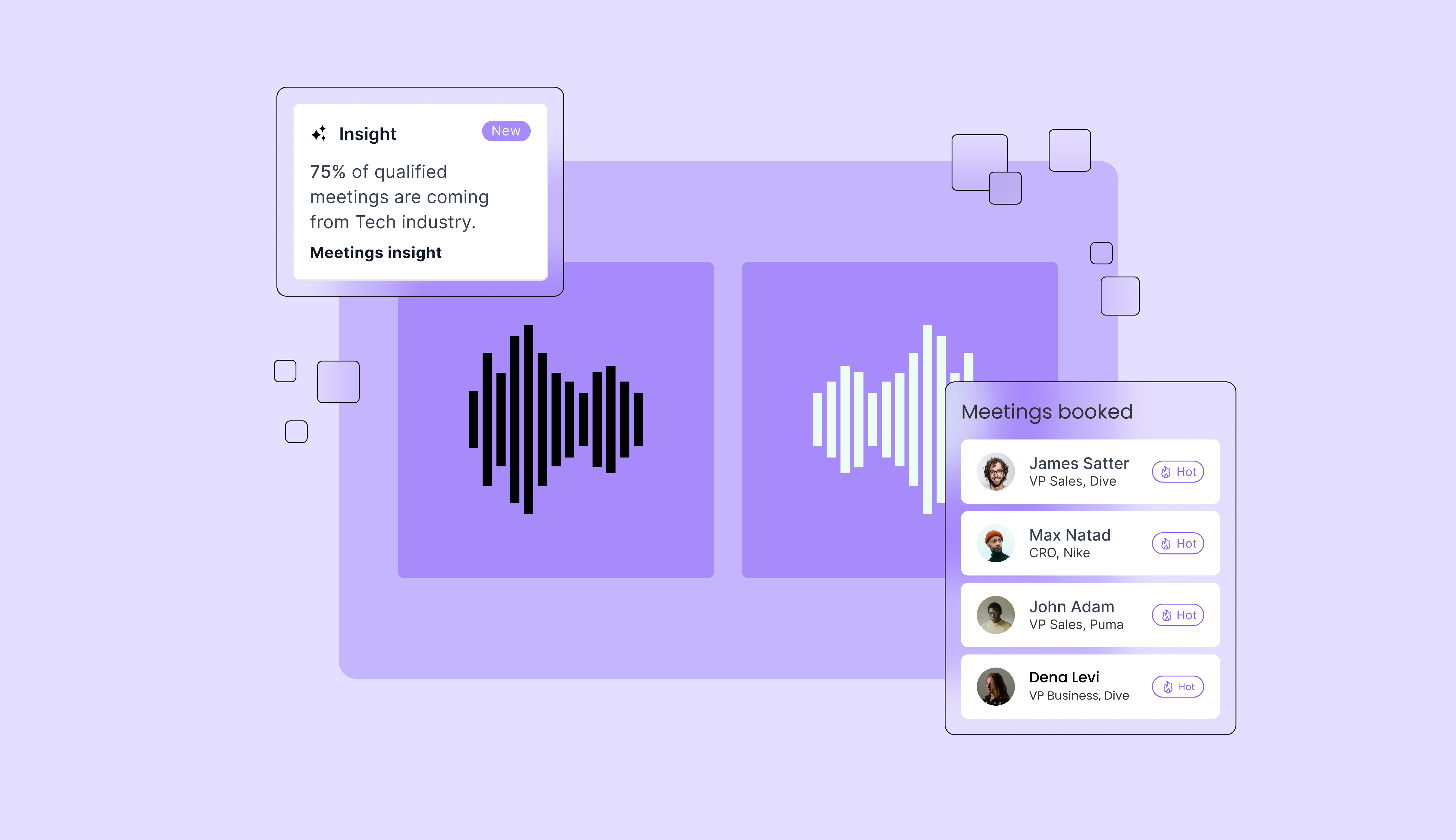
Finally, measure the combined system rather than either side's performance in isolation. Relevant metrics include qualified meetings, conversion between sales stages, time spent on administrative work, customer experience, and the proportion of AI-handled interactions that require correction.
A reduction in headcount or an increase in automated activity is not sufficient evidence that the new organization performs better. The test is whether the team produces better commercial outcomes with its available resources.
Revisiting the split as AI capabilities grow
The division of labor should not be fixed permanently. As AI capabilities improve, product limitations change, and businesses gain experience with the tasks their systems can perform safely, the division of labor should adapt.
Review automated workflows regularly. Identify where human intervention remains frequent, where the system produces unreliable answers, and where representatives add little value to routine execution.
Some activities may become suitable for greater automation after the organization collects enough evidence to define reliable rules. Others may remain human-led because mistakes are costly or because the task depends on trust and contextual judgment.
A controlled rollout provides a sensible way to evaluate changes. Start with one workflow, establish a baseline, monitor errors and outcomes, and expand only when performance supports the decision. Keep a clear route for human review when the system encounters an unfamiliar situation.
Training must evolve alongside these changes. Representatives need to learn to evaluate AI-generated research, challenge questionable recommendations, conduct better discovery, and use saved administrative time for more valuable customer interactions.
The purpose is not to preserve every existing sales responsibility. It is to ensure that people develop the capabilities that become more valuable as routine work is automated.
Build the sales organization around the work that matters
AI and human representatives don't compete for the same set of responsibilities. Their value depends on the work assigned to each and how effectively they operate together.
Automate repeatable execution where outcomes can be defined and checked. Keep people responsible for decisions that demand interpretation, accountability, and relationship-building. Then use performance data to adjust the boundary as the business learns what works.
The strongest sales organization is not the one that automates the most tasks. It is the one that uses automation to give its people more time for the conversations and decisions that determine whether a deal is won.
Frequently Asked Questions
For complex B2B sales, a human should generally remain accountable for the final commercial decision, including negotiations, contractual commitments, and unusual buyer requirements. Straightforward transactions with standardized pricing and terms can support more automation, provided the customer has appropriate controls and access to human support.
Representatives can spend less time building lists, researching accounts, sending routine messages, and managing follow-ups. Their work shifts to discovery, qualification, stakeholder alignment, negotiation, and closing. They also need to critically review AI-generated insights and remain responsible for the quality of customer interactions.
Yes. SMB sales often involve simpler buying processes and more standardized requirements, so more automation is practical. Enterprise sales typically involve more stakeholders, procurement requirements, technical reviews, and commercial negotiation. AI can still handle substantial preparation and coordination, but human judgment generally carries more weight as deal complexity increases.