Sales Territory Planning With AI Data
Territory planning built on outdated firmographic data leaves reps with uneven, unfair patches. Here’s how AI-driven data improves the split.
Sales territories are often designed around last year's account list, revenue figures, and a set of assumptions about where opportunities exist. That can work when markets remain stable. But companies expand, buying patterns change, and new prospects enter the market throughout the year. A territory that looked balanced during planning can become difficult to manage long before the next review.
The consequences affect the entire sales organization. One representative may inherit a patch full of high-potential accounts, while another spends months prospecting companies with little realistic purchasing potential. Quotas become harder to justify, workload becomes uneven, and leadership struggles to distinguish poor execution from an unfavorable territory.
AI-driven data can help sales leaders reassess these conditions using more current information about accounts, demand, and sales performance. The goal is not to let an algorithm assign territories without oversight. It is to give planners better evidence to distribute opportunities fairly and adjust allocations as circumstances change.
Why static territory maps go stale fast
Territory planning determines which accounts, geographic areas, industries, or customer segments each representative covers. A well-designed model gives every salesperson a realistic opportunity to contribute to company targets while making sure important accounts receive appropriate attention.
The problem is that many plans rely heavily on historical revenue or the number of accounts assigned to each representative.
Neither measure guarantees a balanced workload. One territory might contain hundreds of small businesses with limited purchasing potential, while another contains fewer organizations with larger budgets and more immediate needs. Equal account counts can conceal substantial differences in opportunity.
Territories can also become unbalanced after the initial allocation. A company may enter a new market, an existing customer may expand internationally, or a previously overlooked account may begin investing in the technology your business sells. Meanwhile, some accounts may shrink, lose budget, or become less relevant to the product.
When these changes are not reflected in the territory model, sales representatives inherit conditions that no longer match reality.
The resulting problems extend beyond revenue allocation:
- Uneven workloads: Some representatives manage too many high-priority accounts, while others lack enough viable prospects.
- Inconsistent quotas: Targets may reflect outdated assumptions about market potential rather than the opportunities available to each person.
- Missed coverage: Newly attractive accounts remain unassigned or receive little attention.
- Poor forecasting: Revenue expectations rely on territories whose underlying potential has changed.
- Disputes over fairness: Representatives question assignments when the reasoning behind the allocation is unclear.
Forbes' September 2026 article, Planning Beyond the Prompt: Why Enterprise Sales Planning Still Needs Systems Not Just AI Chats, examines why sales planning needs connected data and the ability to evaluate changing assumptions. Territory planning follows the same principle: a plan is useful only as long as its underlying assumptions remain relevant.
What AI-powered data actually adds
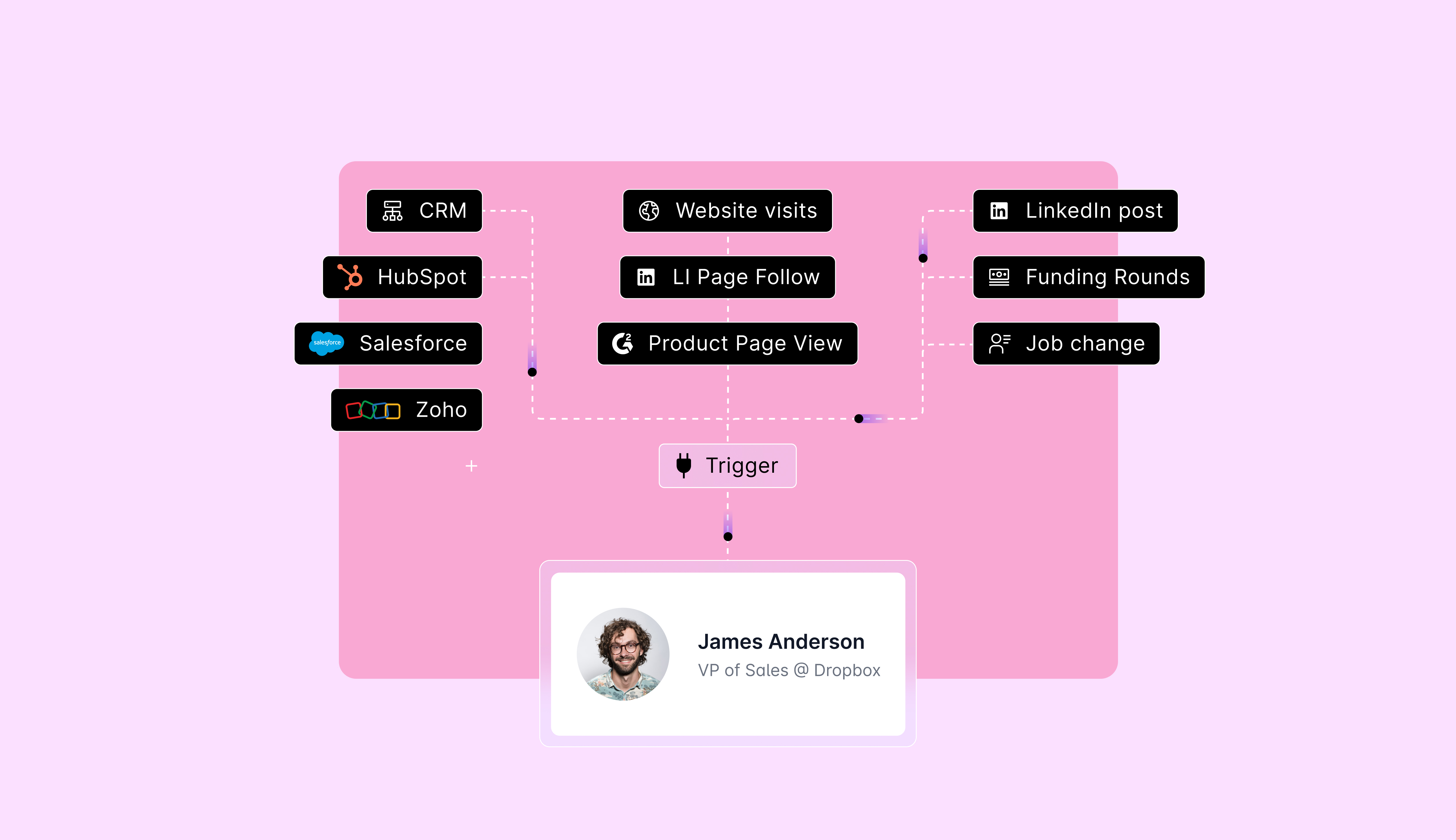
AI can help territory planners analyze more information than a manual spreadsheet exercise can reasonably accommodate. Its value lies in finding patterns across different datasets, estimating account potential, and identifying changes that warrant a closer look.
Firmographic information remains the starting point. Company size, industry, location, revenue, and business model help establish whether an account fits the organization's target market. AI-supported analysis can combine these attributes with additional signals that indicate whether the company's commercial potential is changing.
These may include hiring activity, funding announcements, technology adoption, product interest, historical purchasing patterns, and changes in engagement. Their value depends on the product being sold and the reliability of the data available.
Consider a software business dividing a market between five account executives. Its original model uses company headquarters and revenue to assign accounts. New data reveals that some companies have opened additional offices, expanded their sales teams, or introduced technology that closely matches the product's use case.
Those changes may justify reviewing the original distribution. The team can identify accounts that deserve inclusion, evaluate their potential, and determine whether the existing allocation still makes sense.
AI can also compare proposed territory models against historical performance. Rather than relying solely on last year's revenue, planners can examine account potential, conversion rates, sales-cycle length, and the workload required to cover different groups of companies.
Alta's article on AI Salesforce reporting explores how AI can help revenue teams examine CRM data, identify patterns, and investigate performance differences. For territory planners, the practical benefit is faster access to evidence about account coverage and pipeline distribution.
However, data analysis is not the same as territory optimization. AI can estimate potential and compare alternatives, but the resulting allocation still needs to account for human capacity, account relationships, travel requirements where applicable, and the organization's commercial strategy.
Balancing territories by real account potential
Territory balancing gives representatives a fair opportunity to reach their targets while ensuring the business covers its market effectively.
That does not mean every territory should contain the same number of accounts or carry exactly the same expected revenue. Representatives may have different experience levels, sales cycles, account responsibilities, and ramp requirements. Fairness comes from a defensible allocation model, not identical numbers on a spreadsheet.
Start by defining what a balanced territory should achieve. Depending on the business, the criteria might include expected revenue potential, the number of qualified accounts, workload, geographic coverage, or the mix of new and existing business.
Next, estimate account potential using consistent criteria. Historical revenue can help, but it should be combined with other relevant information. A company that has never purchased from you may still represent substantial potential if it fits the ICP and shows signs of a relevant business need.
A practical approach involves four stages:
- Assess account potential: Estimate which companies are most likely to generate meaningful opportunities, using consistent fit and demand criteria.
- Estimate workload: Consider the research, outreach, meetings, account management, and implementation coordination required for each group.
- Model alternative allocations: Compare different account distributions against revenue potential, workload, and coverage requirements.
- Review the trade-offs: Check whether proposed changes disadvantage representatives because of account maturity, existing relationships, or differences in sales-cycle length.
For example, one territory may contain fewer accounts but require extensive enterprise discovery and procurement work. Another may contain more businesses with shorter sales cycles. Giving both representatives the same number of accounts would not necessarily create an equitable workload.
Alta's sales performance solution focuses on sales performance, connected data, forecasting, and revenue visibility. Those capabilities matter when assessing how account distribution affects performance, but organizations should distinguish performance analytics from dedicated territory-design and optimization systems.
Once the criteria are established, document how each factor contributes to the allocation. Representatives and managers should understand why particular accounts are assigned to them and how the organization measures territory potential.
Rebalancing without disrupting active deals
Territory changes can improve coverage while also damaging the relationships that generate revenue. Moving accounts between representatives may interrupt active opportunities, confuse customers, and create disagreements over deal ownership or commission credit.
AI-supported recommendations should therefore be evaluated against the current state of the sales pipeline, not just future account potential.
Before reallocating an account, check whether it has an open opportunity, a scheduled meeting, an existing customer relationship, or a contractual commitment. A territory may be structurally unbalanced, but transferring a late-stage opportunity could introduce unnecessary risk.
Separate long-term territory design from immediate deal management. Some adjustments can take effect in the next planning cycle, while urgent changes may require targeted reassignment or temporary coverage.
A controlled process should address:
- Account ownership. Define when a representative retains an account and when a reassignment is justified. Existing relationships deserve consideration, especially when the account is actively evaluating a purchase.
- Opportunity protection. Establish rules for open opportunities, commission credit, and handoffs before changing ownership. This prevents territory planning from becoming a source of internal conflict.
- Customer continuity. Ensure the receiving representative has access to account history, previous conversations, outstanding commitments, and relevant contact information.
- Change communication. Explain what is changing, why the adjustment is needed, and when it takes effect. Representatives are more likely to accept an allocation when they understand its basis.
- Performance monitoring. Compare outcomes after reassignment to determine whether the changes improve coverage without creating avoidable disruption.
Automation can flag accounts whose potential or engagement has changed, but it should not automatically override every existing assignment. High-value accounts and late-stage opportunities may require human review before any decision takes effect.
How often territories should be revisited
Annual planning can provide a useful foundation, particularly for organizations with established markets and relatively stable account portfolios. The limitation is treating the annual allocation as permanent.
A more practical approach combines scheduled reviews with event-driven reassessment. At a quarterly review, sales operations can examine territory coverage, account growth, pipeline creation, quota attainment, workload, and changes in the market. This helps identify patterns that would be difficult to detect from a single annual snapshot.
Some developments justify an earlier review. A merger may substantially change an account's structure, an executive departure may affect ownership of an active opportunity, or rapid expansion may create demand that was absent during the original planning cycle.
Other changes may not warrant immediate action. One unusually large deal or a short-term decline in pipeline does not necessarily mean a territory needs to be redesigned. Planners should distinguish temporary fluctuations from sustained changes in opportunity distribution.
Alta's AI Growth Agent connects CRM information and external data signals to identify patterns, surface recommendations, and help revenue teams determine where to focus. In territory planning, those insights can inform periodic reviews and flag accounts that may warrant reassessment. Final territory assignments should still follow the organization's explicit capacity, ownership, and fairness rules.
Measure the results of each substantial adjustment. Compare account coverage, qualified pipeline creation, workload, and quota attainment before and after the change. Where possible, account for differences in tenure, market conditions, and sales-cycle length before attributing improved or weaker performance to the new territory design. The aim is to respond to meaningful changes without continually reshuffling account ownership.
Make territory planning a continuing process
Effective territory planning relies on a realistic view of the market, a defensible method for estimating account potential, and a clear process for changing assignments when conditions warrant it.
AI-supported data can reveal gaps that annual spreadsheets overlook. It can help planners compare accounts, examine performance patterns, and identify when an allocation deserves another look. But technology cannot determine fairness without explicit business rules.
The strongest approach combines regular data updates with controlled rebalancing, transparent criteria, and protection for active deals. That gives sales representatives a clearer understanding of their opportunities and gives leadership a better basis for setting quotas, allocating resources, and planning future growth.
Frequently Asked Questions
Review territory performance quarterly as a starting point, with additional reviews when significant changes affect account potential, staffing, or market coverage. Not every review needs to result in reassignment. The purpose is to identify imbalances early and make changes when the expected benefit outweighs the disruption.
Yes. AI-supported analysis can help vertical teams evaluate industry-specific account characteristics, buying signals, company growth, and historical conversion patterns. Results depend on the data's relevance and quality, as well as the criteria used to define a qualified account. Human review remains important when industry knowledge affects the assignment.
Start with qualified account potential, historical conversion and revenue, expected workload, geographic requirements where relevant, representative capacity, and the status of existing relationships. Company size alone is rarely sufficient. The best model uses consistent criteria and explains how each factor affects the resulting allocation.