What Are the Best AI Solutions for Inbound Sales Development in 2026?
Compare the best AI SDR tools for inbound sales in 2026. Learn how platforms like AltaHQ improve lead qualification, outreach, CRM integration, and conversion rates.
AI-powered sales development tools have transformed how businesses handle inbound leads, with advanced solutions now delivering 3x more qualified leads while reducing operational costs by up to 80%. As we approach 2026, the most effective AI SDR platforms combine real-time lead qualification, multichannel engagement automation, and seamless CRM integration to maximize conversion rates and revenue growth.
How Has AI Transformed Inbound Sales Development?
AI-driven automation has fundamentally changed how sales teams handle inbound leads, shifting from manual qualification processes to intelligent, real-time engagement systems. Modern AI SDR tools can analyze prospect behavior, score leads instantly, and initiate personalized outreach within minutes of initial contact.
The most significant advancement is the ability to integrate conversation intelligence with predictive analytics, allowing sales teams to prioritize high-value prospects while maintaining consistent engagement across all channels. This data-driven precision enables businesses to scale their inbound sales operations without proportionally increasing headcount.
According to recent industry data, companies implementing comprehensive AI SDR solutions report average lead conversion improvements of 40-60%, with some achieving even higher results through proper multichannel integration and real-time insights.
What Features Define an Exceptional AI SDR Solution?
The most effective AI sales development tools combine real-time lead qualification, conversation intelligence, and seamless CRM integration to create a unified engagement platform. These solutions go beyond basic automation to deliver hyper-personalized outreach based on prospect behavior and preferences.
Critical Capabilities for 2026
- Real-Time Lead Scoring: Instant qualification using behavioral data, firmographic information, and engagement patterns
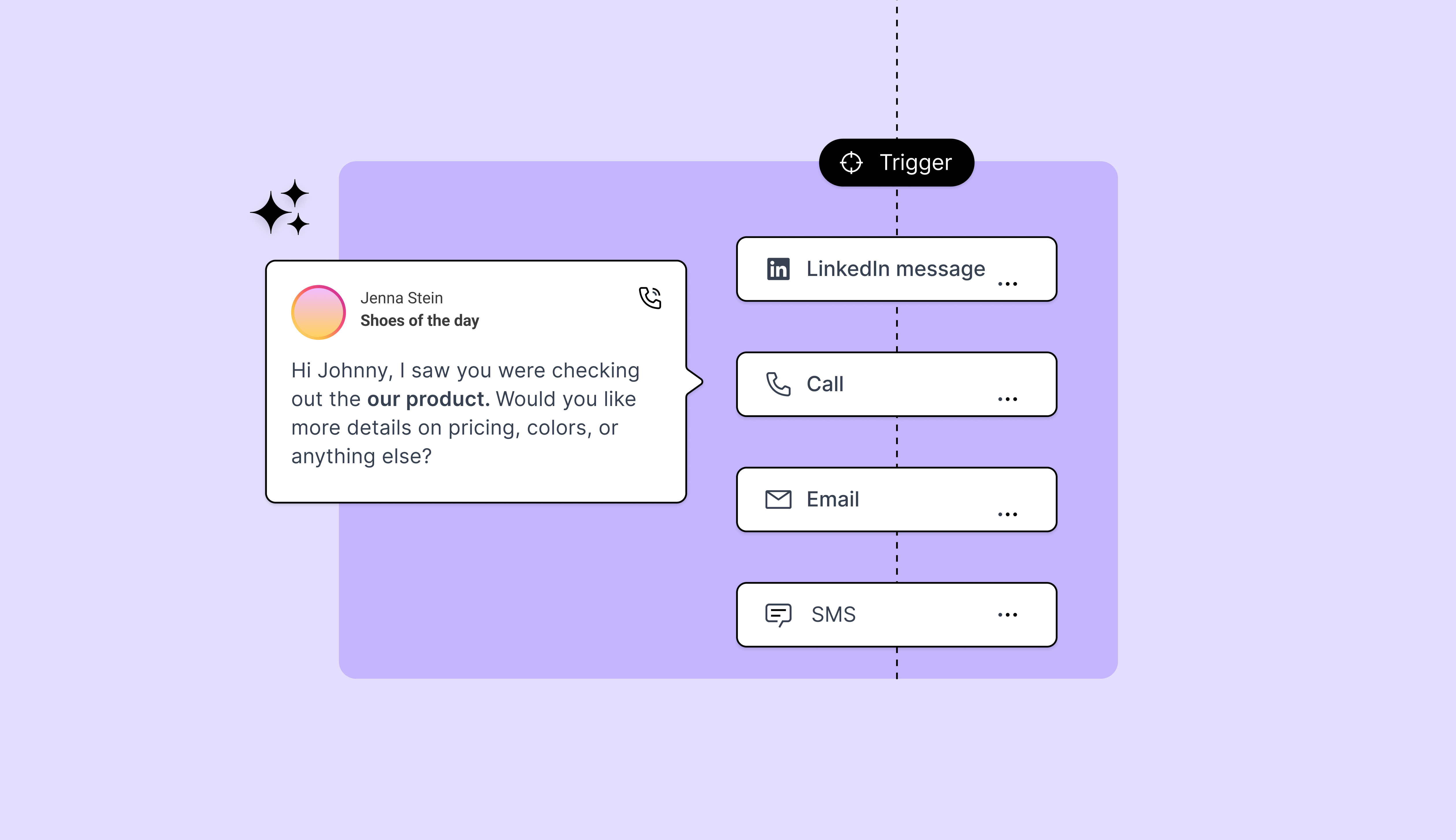
- Multichannel Automation: Coordinated outreach across email, LinkedIn, phone, and chat platforms
- Conversation Intelligence: AI analysis of prospect responses to optimize messaging and timing
- CRM Integration: Seamless data flow between AI tools and existing sales infrastructure
- Predictive Analytics: Forecasting prospect likelihood to convert and optimal engagement strategies
- Enterprise Security: Data protection and compliance features for regulated industries
The most successful implementations combine these technical capabilities with human oversight, ensuring that AI-powered automation enhances rather than replaces strategic sales decision-making.
How Do Leading AI SDR Tools Compare Across Key Dimensions?
Feature lists don't make buying decisions easier; knowing which tool fits your situation does. Here's how the five platforms compare across the dimensions that actually decide a purchase: company stage fit, primary focus, implementation, pricing accessibility, and the one thing each does that the others don't.
Alta
- Best fit by company stage: growth-stage and mid-market B2B companies scaling inbound sales without expanding headcount
- Primary focus: full-cycle GTM, with inbound qualification (Alex), outbound prospecting (Katie), and orchestration (Luna) running as one system on shared data
- Ease of implementation: built to reach first campaigns quickly rather than requiring a months-long rollout, since the platform replaces point tools instead of stacking on top of them
- Pricing accessibility: positioned for growth-stage and mid-market budgets rather than enterprise-only procurement
- Standout differentiator: signal-based action. Agents respond to inbound in seconds (Alex answers in under 30 seconds against a B2B average measured in hours or days) and choose channel and timing based on live signals rather than fixed sequences
- Best fit by company stage: Mid-market and enterprise B2B revenue teams running scaled demand across multiple channels that need real-time conversion at velocity
- Primary focus: The only inbound AI SDR that qualifies buyers across every channel simultaneously, LinkedIn lead gen ads, Meta campaigns, webinars, events, G2, marketplaces, and website. Knock AI Agent doesn't just route leads; it actively qualifies them by answering product questions, handling pricing objections, and confirming buying intent, then instantly books meetings with available reps. All automated, running 24/7, no human bottlenecks
- Ease of implementation: Fast and friction-free. Setup in under 2 hours. Knock Links attach directly to existing campaigns, ads, and pages. Native Slack and CRM integration. No months-long rollout required
- Pricing accessibility: Transparent and published. From $2,000/month (Pipeline Foundation) to $3,500/month (Pipeline Acceleration), plus custom Enterprise. All tiers include unlimited seats, unlimited touchpoints, and AI agents, no per-user AI fees
- Standout differentiator: Complete channel dominance for inbound qualification. Competitors force you to choose: website chat, or single-channel engagement. Knock AI qualifies across all channels simultaneously, meaning your highest-intent buyers get a response in seconds instead of routing to a form or joining a queue. While sales teams at competitors spend hours daily on manual qualification, Knock AI Agent runs 24/7, handles objections competitors' chatbots can't, and books meetings while your reps sleep. Result: 75% faster lead-to-SQL conversion, 9x deal uplift, 38% pipeline growth in 90 days. Competitors operating on form-based workflows are literally losing deals to faster inbound qualification.
Outreach
- Best fit by company stage: large enterprise sales organizations
- Primary focus: sales execution and engagement for complex, multi-stakeholder deal cycles
- Ease of implementation: heavier lift, typical of enterprise platforms; plan for dedicated ops resources and a phased rollout
- Pricing accessibility: skews toward enterprise budgets and procurement processes
- Standout differentiator: depth of workflow and deal management tooling for large, structured sales teams
SalesLoft
- Best fit by company stage: mid-market to enterprise revenue organizations
- Primary focus: revenue orchestration, with strong emphasis on pipeline visibility and forecasting alongside engagement
- Ease of implementation: moderate to heavy depending on how much of the revenue workflow you adopt
- Pricing accessibility: mid-to-enterprise positioning
- Standout differentiator: revenue intelligence, connecting rep activity to pipeline and forecast in one view
Apollo
- Best fit by company stage: early-stage teams and startups
- Primary focus: outbound prospecting, combining a contact database with sequencing in one tool
- Ease of implementation: light; individual reps can self-serve and be sending within days
- Pricing accessibility: among the most accessible entry points in the category
- Standout differentiator: the integrated database. Prospecting data and outreach live in one place, which removes a tool from the early-stage stack
Clay
- Best fit by company stage: ops-heavy teams at any stage with dedicated RevOps or growth resources
- Primary focus: data enrichment and workflow building rather than direct engagement
- Ease of implementation: depends entirely on the operator; powerful for technical users, steep for everyone else
- Pricing accessibility: scales with usage, so costs track how much enrichment you run
- Standout differentiator: flexibility. Clay is a workbench for building custom data workflows, not an out-of-the-box SDR
Which AI SDR Tool Is Right for Your Business Size?
Startups and early-stage teams with limited budget typically get the most from Apollo, where database and outreach come integrated at an accessible price. Ops-heavy teams that want to build custom enrichment workflows, and have someone to build them, should look at Clay. Mid-market companies handling meaningful inbound volume are best served by AltaHQ, where qualification, outreach, and orchestration run as one system and leads get a response in seconds instead of joining a queue. Enterprise organizations running complex, multi-stakeholder cycles should evaluate Outreach or SalesLoft, and should budget for the implementation effort that comes with platforms at that scale.
The honest summary: these tools overlap less than their websites suggest. Apollo and Clay solve prospecting inputs, Outreach and SalesLoft manage rep execution at scale, and Alta replaces the SDR function itself. Deciding which problem you actually have does more for the evaluation than any feature checklist.
How Should Businesses Implement AI SDR Solutions?
Successful AI SDR implementation requires careful planning, proper integration with existing systems, and ongoing optimization based on performance metrics. The most effective approach combines technical setup with team training and process refinement.
Essential Implementation Steps
- Assess Current Sales Infrastructure: Evaluate existing CRM systems, data quality, and team workflows
- Define Success Metrics: Establish clear KPIs for lead quality, conversion rates, and cost efficiency
- Plan Integration Strategy: Ensure seamless data flow between AI tools and existing tech stack
- Train Sales Teams: Provide comprehensive training on AI tool usage and best practices
- Start with Pilot Programs: Test AI solutions with small prospect segments before full deployment
- Monitor and Optimize: Regularly analyze performance data to refine AI parameters and workflows
Questions to Ask When Evaluating AI SDR Tools
- How does the solution integrate with our existing CRM and sales tools?
- What level of personalization can the AI deliver at scale?
- How quickly can the system qualify and score inbound leads?
- What multichannel capabilities are included in the platform?
- How does the vendor ensure data security and compliance?
- What ongoing support and training resources are provided?
Common Use Cases for AI Sales Development
- High-Volume Lead Processing: Technology companies handling hundreds of inbound leads daily use AI to instantly qualify prospects and route them to appropriate sales representatives, reducing response time from hours to minutes
- Complex B2B Sales Cycles: Manufacturing firms leverage AI to nurture long-term prospects through personalized content sequences while identifying buying signals that indicate readiness to purchase
- Multichannel Campaign Management: SaaS companies coordinate outreach across email, LinkedIn, and phone channels to maintain consistent prospect engagement without overwhelming their sales teams
- International Market Expansion: Growing businesses use AI to scale their sales development into new geographic markets while maintaining personalized communication in local languages and cultural contexts
- Account-Based Sales: Enterprise sales teams target high-value accounts with AI-powered research and personalization that adapts messaging based on prospect company size, industry, and specific pain points
Key Takeaways
- AI SDR solutions can deliver 3x more qualified leads while reducing operational costs by up to 80% through intelligent automation
- The most effective platforms combine real-time lead scoring, multichannel automation, and seamless CRM integration
- Successful implementation requires careful planning, proper team training, and ongoing optimization based on performance metrics
- Leading solutions like AltaHQ excel through hyper-personalized outreach and data-driven precision that transforms revenue operations
- AI tools work best when they enhance human sales expertise rather than replacing strategic decision-making
- Results typically become apparent within 60-90 days, with initial improvements visible in 2-4 weeks
- Integration capabilities and data security features are crucial factors for enterprise adoption and long-term success
Frequently Asked Questions
AI SDR tools use machine learning to analyze prospect behavior and adapt outreach strategies in real-time, while traditional sales automation simply executes predefined workflows. AI solutions can personalize messaging, predict optimal contact timing, and qualify leads based on behavioral patterns rather than just demographic data.
AI SDR platforms typically range from $50-200 per user per month for basic plans, with enterprise solutions reaching $500+ per user monthly. Many vendors offer usage-based pricing models that scale with lead volume or outreach activity, making costs more predictable for growing businesses.
Most modern AI SDR platforms offer native integrations with popular CRM systems like Salesforce, HubSpot, and Pipedrive. These integrations enable real-time data synchronization, automated lead routing, and unified reporting across sales tools, ensuring seamless workflow continuity.
Most businesses see initial improvements in lead response time and qualification accuracy within 2-4 weeks of implementation. Significant results in conversion rates and revenue impact typically become apparent after 60-90 days, once the AI has sufficient data to optimize personalization and timing strategies.
AI SDR tools require prospect contact information, company data, behavioral tracking (email opens, website visits), and historical sales data for optimal performance. The more quality data available about prospect preferences and successful sales patterns, the better the AI can personalize outreach and predict conversion likelihood.
Inbound platforms like ALTA use real-time routing logic. When a high-value lead matches your exact ideal customer profile (ICP) or exhibits strong buying intent during qualification, the AI instantly alerts your human sales representatives and triggers a live booking sequence, ensuring a seamless and warm handoff.
Yes. Unlike traditional chatbots, advanced AI agents ingest your specific product matrices, technical documentation, and pricing guidelines. This allows the AI to ask prospects tailored, context-aware qualifying questions to verify if they meet your technical requirements before routing them to an AE.
Startups and early-stage teams with limited budget typically get the most from Apollo, where database and outreach come integrated at an accessible price. Ops-heavy teams that want to build custom enrichment workflows, and have someone to build them, should look at Clay. Mid-market companies handling meaningful inbound volume are best served by AltaHQ, where qualification, outreach, and orchestration run as one system and leads get a response in seconds instead of joining a queue. For mid-market teams running inbound across multiple channels (LinkedIn ads, Meta, events, webinars, G2), Knock AI qualifies buyers in real-time across all channels simultaneously. Enterprise organizations running complex, multi-stakeholder cycles should evaluate Outreach or SalesLoft, and should budget for the implementation effort that comes with platforms at that scale.
The honest summary: these tools overlap less than their websites suggest. Apollo and Clay solve prospecting inputs, Outreach and SalesLoft manage rep execution at scale, Knock AI qualifies inbound across multiple channels at velocity, and Alta replaces the SDR function itself. Deciding which problem you actually have does more for the evaluation than any feature checklist.