Effective Context Window Management for AI Applications in 2026
Learn how context window management improves AI accuracy and cuts costs, with strategies like RAG, rolling summaries, and a practical checklist.
Context window management in AI is the strategic process of organizing, filtering, and prioritizing the information fed to an AI model during a single interaction. By optimizing this data flow, businesses can achieve data-driven precision, transform revenue, and scale growth through intelligent automation.
In This Article
- What is context window management in AI?
- How does context window size affect AI performance?
- What are the challenges of using long context in AI?
- What strategies exist for improving AI conversation quality?
- How do I optimize context windows for chatbots?
- Common Use Cases in Action
- Practical Checklist for Optimization
- Key Takeaways
- Frequently Asked Questions
What is context window management in AI?
Context window management in AI is the methodology of controlling the exact text, data, and historical interactions passed to an AI model within its token limit. Think of the context window as the model's short-term memory. Managing it effectively ensures that the AI receives the most highly relevant data needed to generate accurate, actionable insights without exceeding system constraints or losing focus.
As AI agents become central to enterprise operations, managing this "memory" effectively is what separates disjointed automated replies from intelligent, hyper-personalized automation. Effective management allows AI systems to recall user preferences, reference past conversations, and analyze real-time metrics. When an AI tool seamlessly connects to your CRM, context window management dictates which data points—such as previous purchases or recent support tickets—are prioritized in the prompt to facilitate the highest quality response.
How does context window size affect AI performance?
Context window size directly dictates the volume of information an AI can process at once, which profoundly impacts output accuracy, response speed, and operational cost. A larger context window allows the AI to reference extensive documents and lengthy conversation histories, which is essential for deep data analysis. However, simply maximizing the window size does not inherently scale growth or improve quality.
When the context window is too small, the AI suffers from "amnesia," forgetting earlier parts of a conversation and failing to provide data-driven precision. Conversely, when a massive context window is filled with uncurated data, the AI may process information slower, incurring higher compute costs while struggling to identify the most critical variables. Effective AI-powered automation relies on balancing the window size with highly curated input, ensuring fast, accurate, and relevant outputs that empower business decisions.
What are the challenges of using long context in AI?
The primary challenge of using long context in AI is the "lost in the middle" phenomenon, where AI models successfully recall information at the beginning and end of a long prompt but fail to retrieve critical facts buried in the middle. This degrades the reliability of the AI and reduces the actionable insights businesses rely on.
Additionally, long contexts present significant hurdles regarding computational resources and latency. Processing massive blocks of text requires substantial processing power, which increases response times and drives up operational expenses. To maintain efficiency and scalability, organizations must curate the data entering the context window rather than relying purely on the model's maximum capacity. By addressing these challenges through intelligent data filtering, companies can maintain rapid response times and achieve up to an 80% cost reduction in their API usage.
What strategies exist for improving AI conversation quality?
Improving AI conversation quality requires structured context frameworks that prioritize relevance and clarity. The most effective strategies focus on dynamic information retrieval, summarization, and hierarchical data structuring to ensure the AI always has the right context at the right time.
- External Database Integration (RAG): Retrieval-Augmented Generation allows the AI to search external databases (like a connected CRM) and pull only the most relevant snippets into the context window. This seamlessly connects to your tech stack, providing real-time insights without overcrowding the token limit.
- Selective Memory and Summarization: Instead of passing a full 50-message chat history to the model, implement a background process that periodically summarizes older interactions. The AI receives a concise summary of the past alongside the verbatim text of the most recent messages, maintaining conversational continuity.
- Context Layering: Organize the context window systematically. Place core system instructions at the top, relevant retrieved data in the middle, and the immediate user query at the bottom. This structure maximizes the model's ability to focus on the immediate task while adhering to overarching operational rules.
Applying these methodologies allows organizations to scale revenue operations securely, ensuring that automated outreach remains hyper-personalized and highly relevant.
How do I optimize context windows for chatbots?
To optimize context windows for chatbots, you must implement dynamic pruning, prioritize system prompts, and utilize rolling summaries. Chatbots are uniquely vulnerable to context exhaustion because user conversations can extend indefinitely. Without optimization, a chatbot will eventually reach its token limit and break down.
Start by establishing a strict token budget for your chatbot's responses. Allocate a fixed percentage of tokens for the system persona, a percentage for retrieved customer data, and a percentage for the active conversation history. When the conversation history exceeds its allotted budget, dynamically prune the oldest messages or replace them with a short AI-generated summary. By using AI-driven tools that automate this memory management, businesses can deploy customer-facing chatbots that maintain data-driven precision over thousands of interactions.
Common Use Cases in Action
Effective context management is what transitions AI from a basic utility into a driver of revenue growth. Here are how these strategies apply in enterprise environments:
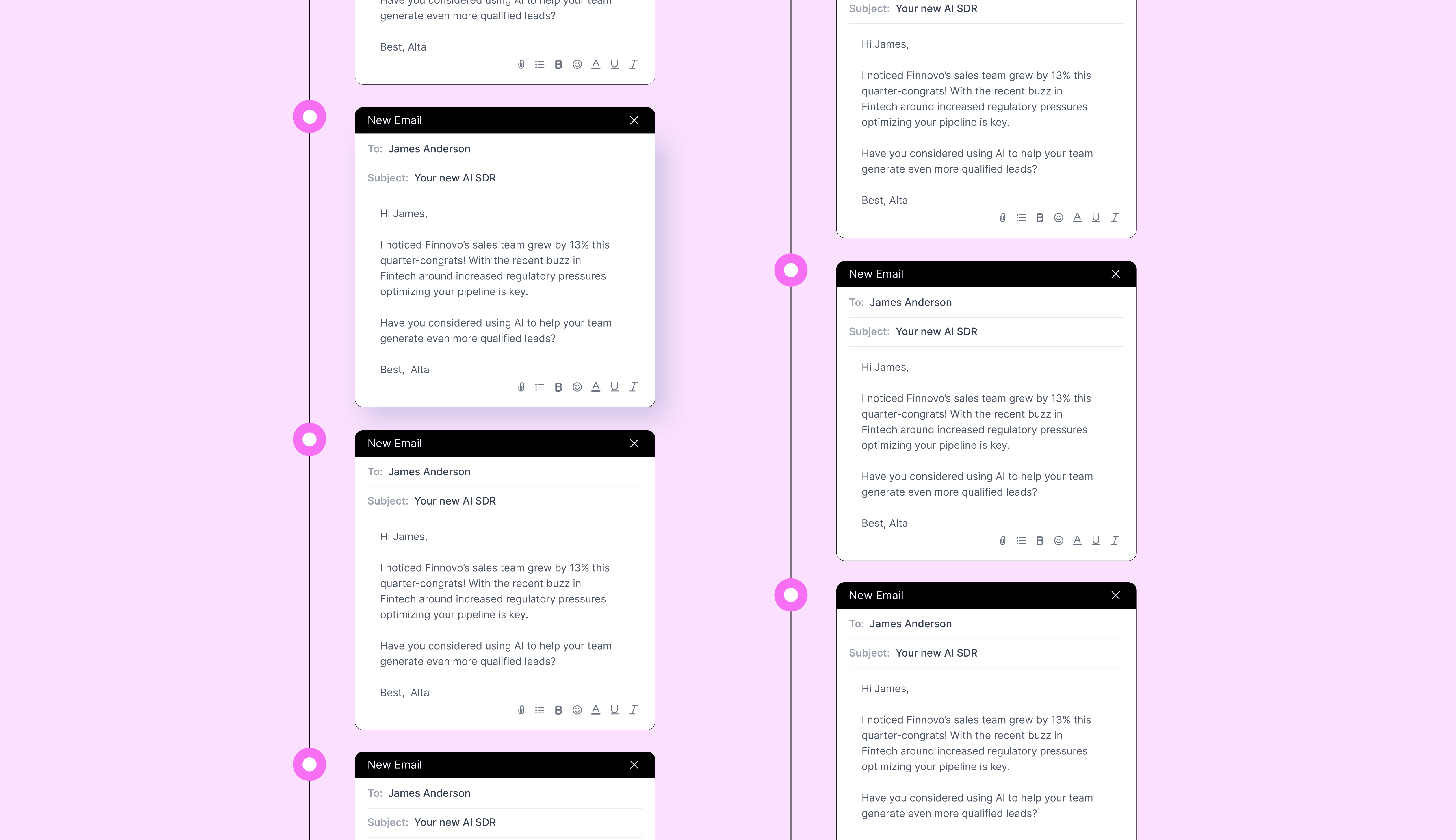
- Automated Sales Outreach: When a sales agent drafts an email, the AI analyzes the prospect's CRM profile, previous email threads, and company news. By optimizing the context window to include only the most persuasive, recent data points, the AI generates hyper-personalized messaging. This precise approach is proven to boost leads by 3x compared to generic outreach templates.
- Revenue Operations Data Analysis: Revenue teams use AI to query vast datasets. Instead of feeding an entire database into the context window, the AI translates the user's natural language into a database query, retrieves the specific financial metrics, and uses that targeted data to provide real-time, actionable insights for leadership.
- Customer Success Chatbots: A support bot seamlessly connects to user account data. By managing the context to include the user's current subscription tier and recent error logs, the bot offers immediate, accurate resolutions, significantly improving customer satisfaction while enabling teams to handle high volumes efficiently.
Practical Checklist for Context Optimization
Evaluate your current AI deployments using this checklist to ensure you are maximizing efficiency and driving intelligent automation:
- Are you tracking token usage? Monitor the average token count per interaction to identify bloat and opportunities for cost reduction.
- Is your system prompt concise? Ensure foundational instructions are clear, professional, and free of redundant rules.
- Do you summarize historical data? Implement automated summarization for conversations that exceed a set threshold (e.g., 10 turns).
- Is your CRM integrated properly? Verify that your AI seamlessly connects to your CRM to pull in only the data fields relevant to the immediate user query.
- Have you tested for the "lost in the middle" effect? Run quality assurance tests to ensure the AI correctly retrieves data placed in the middle of your standard prompts.
Key Takeaways
- Effective context management is essential for AI tools to deliver data-driven precision and actionable insights.
- Maximizing window size without filtering data leads to increased costs and reduced accuracy.
- Connecting your AI to external databases (like CRMs) allows for dynamic context retrieval, maintaining relevance.
- Chatbots require rolling summaries and selective memory to function effectively over long interactions.
- Properly optimized AI context streams can automate to accelerate outreach, potentially boosting qualified leads by 3x and achieving an 80% cost reduction in operations.
Transform Revenue with Intelligent Automation
Mastering context window management is not just a technical necessity; it is a strategic advantage for businesses aiming to scale growth. By implementing layered context, dynamic data retrieval, and intelligent summarization, organizations can ensure their AI applications deliver real-time insights with enterprise-grade security.
At Alta, we specialize in AI-driven tools that streamline sales and revenue operations seamlessly. Ready to empower your business with hyper-personalized outreach that drives results? Explore how our platform seamlessly connects to your tech stack to automate personalized outreach and transform your revenue.
Frequently Asked Questions
Context window management in AI is the practice of controlling, structuring, and filtering the text and data provided to an AI model in a single prompt. It ensures the model receives highly relevant information to generate accurate outputs without exceeding its token processing limits.
You can optimize chatbot context windows by using rolling summaries for older messages, setting strict token budgets for conversation history, and using dynamic retrieval to pull in external customer data only when specifically required by the current conversation turn.
The main challenges include increased computational costs, slower response times, and the "lost in the middle" phenomenon, where the AI model fails to recall crucial information located in the center of a very long prompt.
Effective strategies include layering context logically (system instructions first, recent query last), utilizing Retrieval-Augmented Generation (RAG) to fetch specific data from external databases, and summarizing historical interactions to keep the active prompt focused.
Context window size determines how much background information the AI can access simultaneously. While larger windows allow for deeper data analysis, they can decrease retrieval accuracy and increase operational costs if the inputted data is not carefully curated and prioritized.