GTM Engineering: What the Role Actually Does

Explore how this fast-growing role builds revenue infrastructure, automates workflows, and differs from traditional RevOps.
Go-to-market teams have spent years assembling systems to manage prospecting, lead enrichment, scoring, outreach, and reporting. Each system handles a specific task, but connecting them often requires manual work, complex integrations, and ongoing maintenance. As AI changes what sales teams can automate, businesses are rethinking who builds and manages these processes.
That has brought a new role into focus: the GTM engineer. Rather than concentrating on individual campaigns or maintaining operational processes, GTM engineers build the infrastructure that connects data, automation, and revenue activity. The title is still evolving, but the underlying responsibility is straightforward: make the go-to-market engine work more efficiently.
What a GTM engineer actually builds
A GTM engineer turns revenue processes into connected, repeatable workflows. The role combines technical implementation with an understanding of how sales and marketing generate pipeline.
Consider a company that wants to identify potential customers, qualify them, and start relevant conversations. Without an engineered workflow, a salesperson might export a contact list, enrich records in a separate application, check which accounts match the ideal customer profile (ICP), upload the results to an outreach platform, and create follow-up tasks manually.
A GTM engineer connects these steps. When a new prospect meets a defined condition, the workflow can gather more information, assess fit, select an appropriate outreach sequence, and record the outcome in the CRM.
The engineer builds the logic behind these actions, including the conditions that determine what happens next and when a person needs to intervene.
Typical responsibilities include:
- Data enrichment: Combining CRM records with information about company size, industry, job changes, buying intent, and other relevant signals.
- Lead scoring: Defining how prospects are evaluated and ranked according to company fit, engagement, and evidence of buying intent.
- Workflow automation: Connecting forms, databases, CRMs, communication platforms, and other systems so information moves without repeated manual handling.
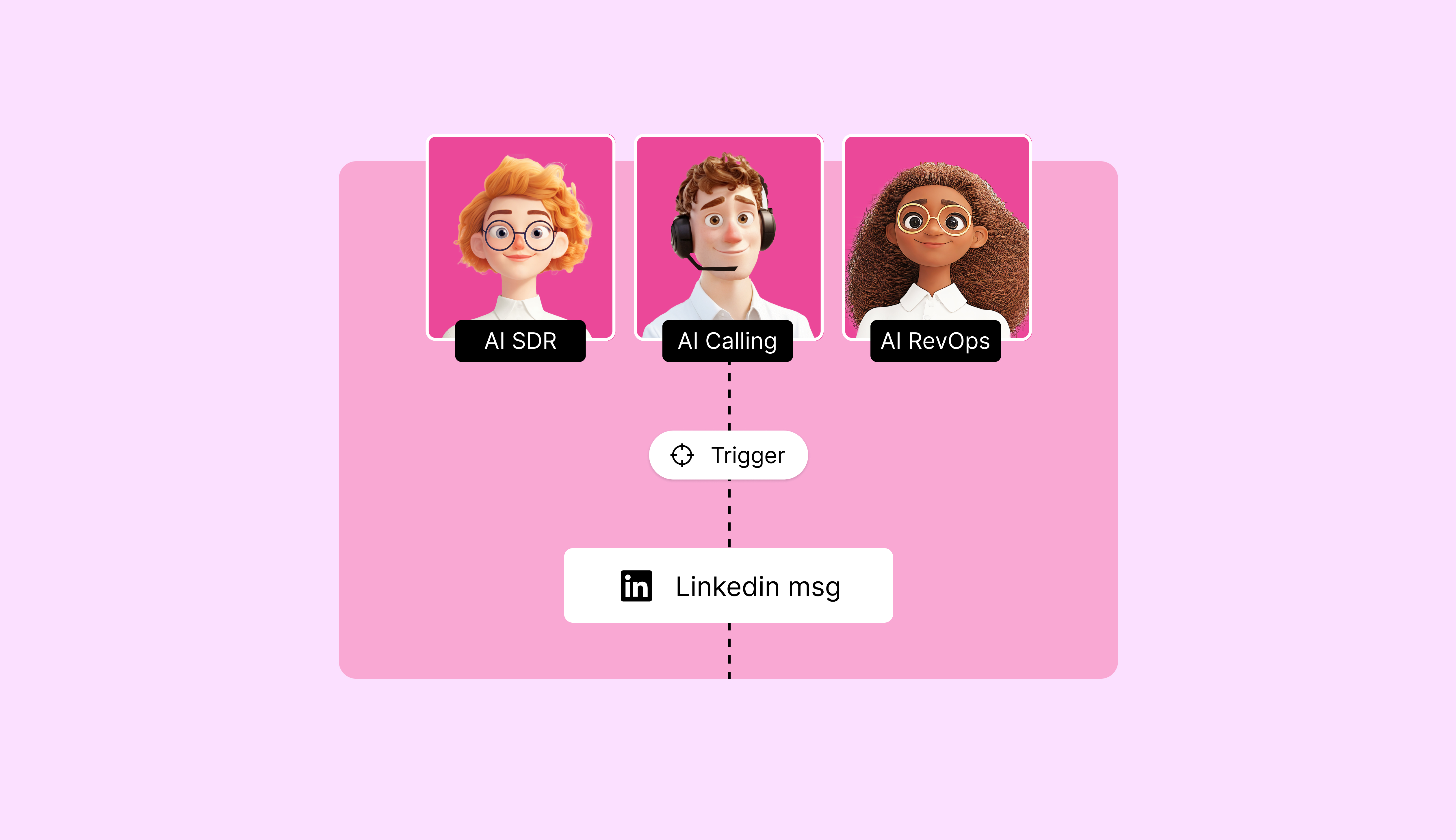
- Outbound orchestration: Building personalized email, LinkedIn, and calling sequences that respond to prospect behavior.
- Testing and monitoring: Tracking response rates, conversion, workflow failures, and data quality to identify what needs adjustment.
- AI implementation: Setting instructions, data access, decision rules, and human review requirements for AI agents operating within revenue workflows.
A well-built workflow also accounts for what happens when something goes wrong. A prospect's company data may be unavailable, an integration may fail, or a score may be too uncertain to justify automated outreach. The system needs a sensible fallback rather than silently producing bad data or contacting the wrong person.
This is where GTM engineering becomes more than connecting applications. It involves designing a system with predictable, measurable actions that's easy to maintain.
For a closer look at one part of that work, Alta's guide to real-time lead enrichment explains how enrichment, qualification, and routing can operate within the same inbound workflow.
How GTM engineering differs from RevOps
GTM engineering and revenue operations (RevOps) overlap, particularly in data management, CRM configuration, automation, and reporting. The difference is largely one of emphasis.
RevOps is responsible for the operating framework that allows sales, marketing, and customer success to work toward shared revenue goals. This can include defining processes, managing territories, maintaining forecasting practices, setting performance measures, and ensuring that teams use consistent data.
GTM engineering focuses more directly on building the technical systems that execute those processes.
These responsibilities are not mutually exclusive. A RevOps professional may build sophisticated automations, while a GTM engineer may contribute to forecasting, process design, or operational planning. The distinction depends on the company, the team's maturity, and the skills of the people involved.
The practical difference shows up when a team runs into a problem. Suppose qualified inbound leads are reaching sales representatives several hours after submitting a form. RevOps might investigate routing rules, response-time metrics, ownership, and the handoff between marketing and sales. A GTM engineer might inspect the event flow, find that enrichment runs in a delayed batch, and redesign the workflow so qualification and routing happen immediately after submission.
Both functions address the same business problem from different angles. A 2025 Forbes analysis of GTM engineering describes the emerging role in terms of workflow architecture, integrations, performance monitoring, and the coordination of human and AI activity. These responsibilities help explain why GTM engineering is increasingly distinct from traditional operations, even when the two functions share ownership of revenue systems.
The skills that make someone good at it
GTM engineering requires enough technical knowledge to build and troubleshoot systems, alongside enough commercial understanding to know which problems are worth solving.
The strongest candidates can move between those two perspectives. They understand how an operational decision affects revenue performance, and they can translate that decision into working logic.
Technical skills usually include:
- APIs and integrations: Connecting applications and understanding how they exchange information.
- SQL and data modeling: Querying structured data, identifying inconsistencies, and organizing records for reliable use.
- Automation platforms and scripting: Building workflows with low-code systems, webhooks, scripts, or custom integrations.
- CRM architecture: Understanding objects, fields, permissions, lifecycle stages, and the consequences of changes to the underlying data model.
- AI workflow design: Creating instructions, defining permitted actions, testing outputs, and deciding when an AI system should refer a decision to a person.
Coding requirements vary. Some roles rely heavily on Python, JavaScript, SQL, or custom API integrations. Others use visual workflow builders and existing connectors for most implementation work. The more unusual or demanding the workflow, the more valuable programming skills tend to become.
Commercial knowledge matters just as much. A technically impressive automation has little value if it targets the wrong prospects or optimizes a metric that does not translate into revenue.
A GTM engineer should understand ICP definition, qualification criteria, sales stages, conversion rates, deliverability, and the practical differences between an interested prospect and a sales-ready opportunity.
They also need to test their assumptions. A scoring model that performs well on historical records may struggle with a new market segment. An AI-generated message may read naturally but misrepresent a prospect's situation. Both problems require evaluation against actual outcomes.
Alta's guide to LLM-powered lead scoring explores how language models can interpret signals in email replies, call transcripts, and other unstructured sales information. It also illustrates why scoring rules need validation against real conversion results rather than being accepted at face value.
Where this role typically sits on a team
There is no single organizational model for GTM engineering. The reporting line usually depends on which part of the revenue process needs the most technical support.
In a smaller company, the GTM engineer may work directly with the founder or head of revenue. The person might own prospecting infrastructure, CRM integrations, outbound automation, and reporting because few specialists are available to split the work.
At a larger organization, the role may sit within RevOps, sales operations, growth, or a dedicated GTM engineering function. Some teams embed engineers within individual revenue groups, letting them focus on a specific product, customer segment, or sales motion.
The reporting line matters less than clear ownership. Someone needs to decide which workflows the engineer builds, who approves changes to qualification rules, and who is accountable when an automated process affects customer relationships.
GTM engineers also need access to the people who understand the commercial process. A sales representative can explain why a particular objection matters. Marketing can clarify how campaign engagement should influence qualification. RevOps can identify discrepancies in lifecycle definitions and reporting.
Without this input, the engineer risks automating a process that looks consistent on paper but fails to reflect how the business actually sells.
The emerging product category around AI-driven revenue workflows provides another context for the role. For example, Alta's AI Growth Agent is designed to connect revenue data, identify patterns, and inform actions across go-to-market activity. Systems in this category make workflow design, data quality, and clear rules for automated decisions increasingly relevant to the engineer responsible for implementation.
How to know if your team needs one
Hiring a GTM engineer makes sense when technical limitations are repeatedly slowing down revenue work. It is less compelling when the company has not yet established a clear sales process or does not generate enough activity to justify automation.
Look for the following symptoms. Your team spends too much time moving data between systems. Employees repeatedly export spreadsheets, correct records, upload lists, and reconcile conflicting information. These tasks suggest an opportunity to connect existing systems and reduce manual handling.
Qualified leads wait too long for a response. Inbound submissions sit in queues while enrichment, qualification, and routing happen in separate stages. An engineer can examine the handoffs and build a faster process.
Your outbound activity is difficult to personalize at scale. Sales representatives research accounts manually, while automated sequences rely on basic templates. Better access to company information, buying signals, and previous interactions can make personalization more relevant.
You cannot explain why a workflow produces its results. Scores change without clear reasoning, routing rules have accumulated over time, or performance reports do not match what representatives see. The issue may be a lack of documentation, testing, and ownership.
Every new campaign requires another application. Adding a new data source or communication channel introduces more subscriptions, integrations, and maintenance. An engineer can assess whether the existing infrastructure can support the requirement with less complexity.
Before opening a role, identify one specific business problem and estimate its cost. Measure time spent on manual processing, delays between lead submission and first contact, errors in CRM data, or the conversion rate from qualified lead to meeting.
Then determine whether the issue needs engineering, a clearer process, or a change to the existing configuration. Not every operational problem warrants a new hire.
A useful first project might be a single inbound workflow that enriches a lead, checks it against the ICP, assigns an owner, and offers a meeting when appropriate. Its performance can be compared with the current process before expanding automation to other activities.
The objective is to build a repeatable system that the business can measure and maintain, not to automate every possible task.
Frequently Asked Questions
No, although the responsibilities can overlap. Marketing operations usually concentrates on campaign infrastructure, marketing automation, attribution, and marketing data. GTM engineering has a broader technical focus on connecting revenue workflows across marketing, sales, and other go-to-market functions. The exact division depends on the organization.
Not every role requires extensive programming. Low-code platforms can handle many integrations and routine workflows. However, knowledge of APIs, SQL, webhooks, and at least one scripting language can help when standard connectors are insufficient or workflows require more advanced logic.
The exact stack varies, but commonly includes a CRM such as Salesforce or HubSpot, data enrichment and prospecting platforms, workflow automation systems, outreach software, and analytics tools. Engineers may also use SQL, Python or JavaScript, API testing utilities, and AI platforms. The objective is to make these systems work together reliably rather than simply adding more applications.