The Best AI Sales Agents for B2B Outreach in 2026

Compare the best AI sales agents for B2B outreach in 2026. See what 10 leading tools do, who they fit, and how to choose the right one for your team.
Speed has always decided outbound. Leads contacted within the first five minutes are dramatically more likely to convert than ones reached hours later, and most B2B teams still respond in days. That gap is what AI sales agents are built to close. This guide breaks down what these tools do, compares ten of the leading options for B2B outreach, and gives you a practical way to choose the right one without sitting through ten demos.
What Are AI Sales Agents?
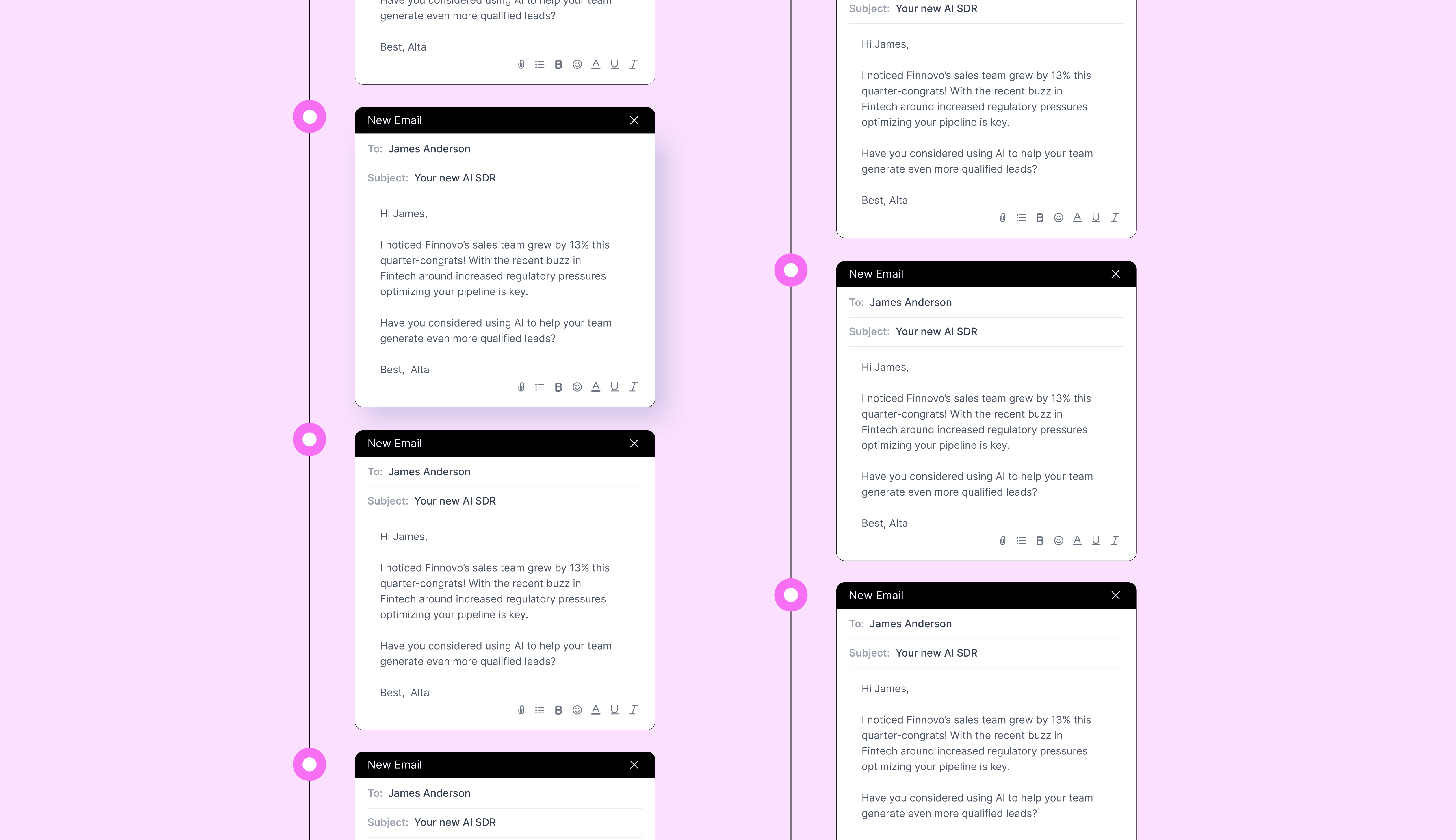
An AI sales agent is software that does the work of a sales development rep. It researches prospects, writes and sends personalized outreach, follows up, handles replies, and in many cases books the meeting. Unlike a dashboard you operate, an agent takes actions on its own based on rules, data, and buying signals.
They matter now because the SDR function is one of the most expensive and highest-churn parts of a revenue team, with long ramp times and inconsistent output. AI-driven sales automation lets a lean team run the volume of a much larger one, contacting the right accounts at the right moment instead of blasting a static list. They are not a replacement for judgment, though. Agents are strongest on the repetitive top of the funnel. Discovery, negotiation, and complex relationships still belong to humans.
AI Sales Agents vs. AI-Assisted Tools
Not every tool marketed as AI is a true sales agent. AI-assisted tools help you write better outreach, but you still send, sequence, and follow up manually. AI sales agents research, write, send, follow up, and manage replies with little to no manual effort. The difference matters when you compare price tags, because an assistant and a full agent are not the same purchase.
The 10 Best AI Sales Agents for B2B Outreach in 2026
This comparison of AI sales tools focuses on what each platform does well and who it fits, rather than a single ranking. The right pick depends on your team size, budget, channel mix, and how much you want to automate. Pricing is approximate and shifts often, so confirm current numbers before you commit.
Alta. The AI GTM System of Actions, built so one platform runs outbound, inbound, and growth instead of a stack of point tools. Katie runs outbound prospecting and multichannel outreach, Alex qualifies inbound leads through AI-powered calls and chat, and Luna turns your CRM and 50+ data sources into buying signals that make both agents smarter. Customers including monday.com, Mesh, and PayPal report 3x more qualified meetings and roughly 20 hours saved per rep each week. SOC2 and ISO 27001 compliant. Best for teams that want signal-based outbound, instant inbound qualification, and revenue intelligence in one system.
11x (Alice). An autonomous enterprise AI SDR for email and LinkedIn, paired with a separate phone agent, on custom enterprise pricing. Best for larger orgs with the budget and sales ops support to run it.
Artisan (Ava). A turnkey AI BDR with one of the cleaner interfaces in the category, email-first with LinkedIn touchpoints and sales-led pricing. Best for teams that want a hands-off agent, though tight technical-ICP motions may want more control.
AiSDR. Multichannel automation across email, LinkedIn, SMS, and phone via Aircall, with transparent pricing from around $900 a month. Best for growth-stage teams that want predictable, no-lock-in costs.
Salesforge (Agent Frank). High-volume cold email built on its own deliverability stack, with auto-pilot and co-pilot modes from around $599 a month. Best when inboxing is the make-or-break variable, weaker for nuanced technical sales.
Reply.io (Jason AI). An AI agent inside a mature engagement platform spanning email, LinkedIn, WhatsApp, and SMS, with the AI plan from around $500 a month. Best for teams that want AI automation inside a tool they already use.
Persana AI. Data-driven prospecting and personalization at scale, drawing on a large contact database and dozens of buyer signals, on affordable credit-based tiers. Best for personalization depth on a tighter budget.
Clay. A GTM data platform for waterfall enrichment and list building that feeds your outreach tools, not a turnkey SDR. Best for teams that want to build precise, enriched lists and custom data workflows.
Lindy. A no-code builder for custom AI agents covering prospecting, scheduling, and CRM tasks. Best for ops-minded teams comfortable designing their own workflows.
Regie.ai. An AI content engine plus autonomous Auto-Pilot agents that layer onto Salesforce, HubSpot, Outreach, or Salesloft. Best for larger SDR teams that want AI content speed while keeping their current stack.
How to Choose the Right AI Sales Agent
Start with the job you need done, not the feature list. A solo founder, a five-person sales team, and an enterprise RevOps group will land on very different tools. Three factors do most of the work:
- Team size and motion. Lean teams want turnkey, self-serve agents. Enterprise teams need orchestration, integrations, and ops support, and can absorb a heavier setup.
- Budget and pricing model. Entry-level email agents start in the hundreds per month. Multichannel and enterprise platforms run into the thousands, often with annual commitments. Price the total, including data and infrastructure add-ons.
- Outreach goals and channels. If you only run cold email, a deliverability-focused tool may be enough. If you need email, LinkedIn, calls, and inbound qualification working together, you want a coordinated system.
The most reliable filter is personalization quality. Autonomous outreach either references something real and timely about the prospect, or it generates unsubscribes. For a deeper walkthrough, see our practical guide to choosing the right AI sales agent.
AI Sales Agent Implementation Examples
The right rollout looks different depending on your team size and how much you want to automate. The three scenarios below are representative examples rather than named customer deployments, and the figures are illustrative targets to plan against, not guaranteed outcomes. Use them to map your own situation to the kind of setup, timeline, and budget involved.
SaaS Startup With a 2-Person Sales Team
The challenge. A seed-stage SaaS company has two people splitting prospecting, demos, and follow-up. Founder-led selling works until it doesn't, and nobody has time to run consistent outbound at volume. Hiring a dedicated SDR is premature, but the pipeline is too thin to leave alone.
Why this works for a lean team. A two-person team needs pipeline without adding headcount. Katie runs the prospecting and multichannel outreach a founder can't keep up with manually, and Alex qualifies inbound so nothing sits unanswered while the team is in demos. One person can run the volume that normally takes a small team. A single-person GTM team built more than $1M in pipeline with Alta in six months.
Implementation. Connect your CRM, email, and LinkedIn, then define a tight ICP so the agent works a focused segment instead of a static blast. Setup runs about two to three days, and most teams launch their first campaign within a week. Start narrow, read the early replies, then widen the segments that respond.
What to plan for. Treat the first few weeks as calibration. A focused list with genuine personalization is what moves reply rates, so resist the urge to scale volume before the messaging is landing.
B2B Company Scaling From 5 to 15 Reps
The challenge. A growth-stage B2B team is tripling its sales headcount. More reps means more tools, more handoffs, and more leads slipping between outbound, inbound, and follow-up. Stitching that together with point tools creates gaps exactly when speed matters most.
Why a coordinated system fits. This is where one platform beats a stack. Alta runs outbound, inbound, and growth intelligence together. Katie handles prospecting and multichannel outreach, Alex qualifies inbound leads through AI calls and chat, and Luna turns your CRM and 50+ data sources into the buying signals that make both agents smarter.
Implementation. Plan a 30-day rollout. Start by syncing your CRM so the agents read and write the context your team relies on, then layer in signal sources and sequence logic. Because the agents share data, inbound and outbound stop competing for the same accounts.
What to plan for. Teams running this motion report 3x more qualified meetings and roughly 20 hours saved per rep each week. To put that in context, a rep going from 12 qualified meetings a month to 36 is that same 3x lift, with the recovered hours going back into live conversations. Alta is SOC2 and ISO 27001 compliant, and most teams launch their first campaign within a week.
Enterprise Team Replacing 10 SDRs
The challenge. An enterprise revenue org is carrying ten SDRs with long ramp times, high churn, and inconsistent output. Leadership wants to lower cost per opportunity without losing coverage, and any change has to clear security, compliance, and a Salesforce-centric stack.
Why this holds up at enterprise scale. Luna provides the revenue intelligence layer, reading your CRM and 50+ data sources to surface which accounts are worth working now. Alex qualifies inbound in under 30 seconds, against a B2B average closer to 42 hours, so high-intent leads never go cold while a rep is busy. SOC2 and ISO 27001 compliance gives security and legal what they need to sign off.
Implementation. Expect a 30 to 60 day rollout. Scope the Salesforce integration first, run a security and data-privacy review, and define which plays the agents own versus the human team. Change management matters here. Reps need to see the agents as coverage that frees them for complex deals, not as a threat.
What to plan for. Model the ROI against fully loaded SDR cost, including salary, tooling, and ramp. Speed is the lever: responding inside five minutes can lift conversion by up to 21x, which is the gap a team of ten reps cannot cover by hand. Run a pilot against one segment with a clear baseline before rolling out across the org.
8 Essential Questions for Choosing the Right AI Sales Agent
Run any tool through these before you buy:
- What does it actually automate? Research, writing, sending, follow-up, reply handling, booking, or only some of these?
- Where does its data come from? Does it find and enrich leads, or do you bring your own list?
- Does it use real buying signals? Job changes, funding, hiring, and intent, or just static profile data?
- Which channels does it cover? Email only, or email plus LinkedIn, calls, and SMS in one sequence?
- How much control do you keep? Is there a co-pilot or approval mode, or is it fully hands-off?
- How does it handle replies and qualification? Can it interpret responses and route or book, or just send?
- What does it integrate with? Does it sync cleanly with your CRM and existing stack?
- Is it secure and compliant? Look for SOC2 and ISO 27001 once it touches customer data.
The Bottom Line
The best AI sales agent is the one that matches your team, your budget, and your motion. Lean teams win with turnkey, transparent tools. High-volume teams need deliverability and scale. And teams that want their whole go-to-market motion working as one system should look for a coordinated platform rather than a pile of point tools.
That is the gap Alta was built to fill: signal-based outbound with Katie, instant inbound qualification with Alex, and growth intelligence with Luna, all learning from each other. To see what one connected system looks like against your current stack, book a demo. Most teams launch their first campaign within a week.
Frequently Asked Questions
An AI sales agent is software that automates sales tasks like prospecting, lead qualification, follow-up, and meeting booking, and takes action autonomously rather than just suggesting next steps. Unlike scripted chatbots, agents reason about buyer intent and adapt to the conversation. The category spans outbound prospecting agents, inbound qualification agents, and orchestration agents that coordinate across the funnel.
Yes, when they are matched to the right motion and fed good data. Teams using AI sales agents commonly report more qualified meetings, faster lead response, and significant time saved per rep. The biggest driver of results is personalization quality and timing, so an agent that acts on real buying signals will outperform one sending generic outreach to a static list.
For repetitive, high-volume work like initial outreach, follow-up, and basic qualification, yes. For complex B2B deals with multiple stakeholders and nuanced negotiation, AI works better as a force multiplier than a replacement. The strongest approach pairs AI handling volume with humans handling relationships and closing.
AI SDR platforms typically range from $50-200 per user per month for basic plans, with enterprise solutions reaching $500+ per user monthly. Many vendors offer usage-based pricing models that scale with lead volume or outreach activity, making costs more predictable for growing businesses.
Start by identifying the one workflow costing you the most pipeline, then evaluate tools against that. Confirm the agent connects to your CRM and data, actually executes rather than just advises, fits your existing stack, and meets SOC 2 and ISO 27001 standards. Finally, run a contained pilot against a clear baseline before signing an annual contract.
Most established AI sales agents integrate with major CRMs like Salesforce and HubSpot, syncing contacts, activity, and meeting data automatically. The depth of integration varies, so confirm the tool reads the CRM context it needs and writes back the data your team relies on. You can see how Alta handles this on our integrations page.