Evaluating the Personalization Impact of Large Language Models in Sales Strategies 2026

Discover how large language models improve sales personalization with context-aware outreach, CRM data, real-time insights, and measurable AI-driven results.
Large language models enhance customer outreach by replacing static templates with hyper-personalized, context-aware communication generated in real-time. By leveraging AI-powered automation, sales teams can accurately measure engagement, boost qualified leads, and scale growth through data-driven precision.
In This Article
- Why Does Personalization in Sales Influence Buyer Decisions?
- How Do Large Language Models Enhance Customer Outreach?
- Real-World Case Studies on Successful Sales Personalization
- 5 Steps to Evaluate Personalization Effectiveness in Marketing Campaigns
- Common Use Cases for AI-Powered Outreach
- Key Takeaways
- Frequently Asked Questions
Why Does Personalization in Sales Influence Buyer Decisions?
Personalization in sales influences buyer decisions by reducing cognitive load and demonstrating a deep understanding of the prospect's specific challenges and goals. When outreach resonates with a buyer's immediate context, it builds trust and significantly increases the likelihood of conversion.
The psychology behind personalization is rooted in relevance. Modern buyers are inundated with generalized marketing messages that offer little value to their unique situations. Utilizing data-driven precision to tailor outreach ensures that your messaging stands out. When an email or message explicitly references a buyer's recent company milestone, industry shift, or specific pain point, it transitions the interaction from a generic pitch to a valuable consultation.
As we look toward 2026, personalization in sales is no longer just about inserting a first name into a subject line. It requires intelligent automation that synthesizes diverse data points to create cohesive, multichannel narratives. By engaging buyers with relevant, actionable insights at exactly the right time, organizations can accelerate the sales cycle and transform revenue outcomes.
How Do Large Language Models Enhance Customer Outreach?
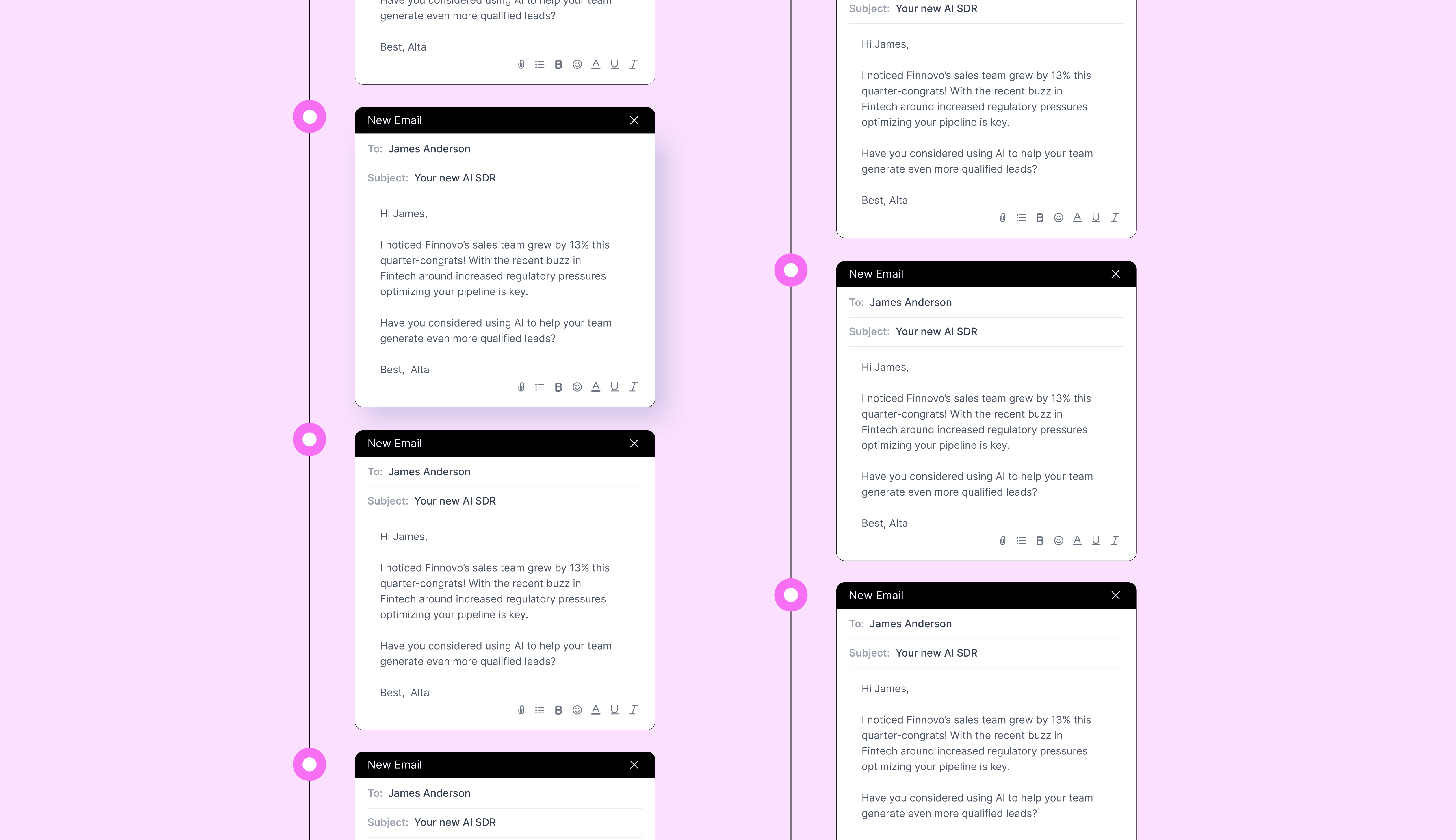
Large language models enhance customer outreach by analyzing complex CRM data, past interactions, and contextual cues to autonomously generate highly relevant, individualized communication. This data-driven precision enables sales teams to scale hyper-personalized engagement without manually writing every message.
Traditional personalization methods rely heavily on rigid rule-based logic and static merge tags. These legacy systems often result in disjointed messaging when buyer data is incomplete or context shifts unexpectedly. In contrast, large language models in marketing and sales adapt fluidly to the nuanced realities of each prospect. Recent studies have analyzed how AI adapts sender-side variables, but the most significant impact occurs when these models optimize for receiver-side engagement and measurable business outcomes.
Advantages of LLM-Driven Personalization
- Contextual Understanding: AI models analyze the sentiment and intent of inbound queries, crafting responses that address the exact needs of the prospect.
- Operational Efficiency: AI-powered automation handles the heavy lifting of drafting, refining, and scheduling outreach, resulting in an up to 80% cost reduction in campaign execution.
- Seamless CRM Sync: Advanced LLM tools seamlessly connect to your CRM, ensuring that every message is backed by real-time insights and up-to-date prospect histories.
Potential Pitfalls to Navigate
While the benefits are substantial, scaling growth with AI requires careful oversight. Organizations must ensure their AI models are grounded in accurate data to maintain brand voice consistency. Additionally, continuous monitoring is necessary to verify that personalization efforts remain relevant and do not cross the line into becoming overly intrusive. Evaluating outreach effectiveness through clear metrics is critical to maintaining high-quality engagement.
Real-World Case Studies on Successful Sales Personalization
Evaluating the impact of personalization requires examining tangible metrics. Below are two examples of organizations successfully utilizing large language models to scale their revenue operations.
Enterprise Software Solutions: Scaling Revenue with AI
A global enterprise software company struggled to maintain personalization at scale as their sales team expanded. Their previous outreach felt generic, resulting in stagnant conversion rates. By integrating Alta’s intelligent automation, the company seamlessly connected the AI to their CRM stack. The AI models synthesized past prospect interactions and market trends to generate hyper-personalized email sequences.
The Outcome: The data-driven precision of the new campaigns generated 3x more leads within the first quarter. Furthermore, the sales team reclaimed hours previously spent on manual research, allowing them to focus entirely on closing high-value deals.
Financial Services Firm: Optimizing Efficiency
A leading financial services firm faced rising acquisition costs and diminishing returns from their traditional outbound marketing efforts. They needed a way to tailor their outreach to individual corporate clients without increasing headcount.
The Outcome: By implementing AI-powered automation to craft bespoke outreach based on real-time market insights, the firm achieved an 80% cost reduction in their lead generation operations. The hyper-personalized approach significantly improved their win rates and provided real-time insights that allowed management to forecast revenue with unprecedented accuracy.
5 Steps to Evaluate Personalization Effectiveness in Marketing Campaigns
To ensure your AI-driven strategies are yielding optimal results, follow this actionable framework for evaluating personalization effectiveness in marketing campaigns.
Step 1: Establish Baseline Metrics
- Before deploying large language models, document your current performance metrics. Record your baseline open rates, reply rates, meetings booked, and overall win rates. This historical data is essential for measuring the actual impact of AI-powered automation.
Step 2: Implement A/B Testing for AI Variations
- Run concurrent campaigns comparing your traditional templates against AI-generated, hyper-personalized outreach. Segment your audience evenly and ensure that the AI seamlessly connects to your CRM to pull accurate variables for a fair comparison.
Step 3: Analyze Real-Time Insights
- Leverage the analytics dashboards within your AI tools to track engagement as it happens. Look beyond just open rates; evaluate how deeply prospects are engaging with the content, such as link clicks, time spent reading, and the quality of replies.
Step 4: Monitor Output Quality and Tone
- Regularly review a sample of the AI-generated messages. Ensure the tone remains confident, professional, and innovative, aligning with your brand voice. Data-driven precision should enhance the conversation, not make it sound robotic.
Step 5: Measure Revenue and Cost Impact
- Evaluate the bottom-line results. Calculate the increase in qualified pipeline and the reduction in operational costs. A successful implementation should demonstrate clear outcomes, such as delivering 3x more leads or significantly reducing the cost per acquisition.
Common Use Cases for AI-Powered Automation
AI-driven personalization is highly versatile. Here are the primary scenarios where large language models are transforming revenue operations:
- Account-Based Marketing (ABM): Crafting highly specific, multichannel messaging for key stakeholders at target accounts, utilizing deep industry insights to accelerate deal cycles.
- Inbound Lead Follow-Up: Automating immediate, context-aware responses to inbound inquiries, ensuring prospects receive accurate information based on their specific questions in real-time.
- Pipeline Acceleration: Re-engaging stalled opportunities with tailored content that addresses their specific objections or highlights relevant new features, moving them forward in the sales funnel.
Key Takeaways
- Intelligent Automation is Essential: By 2026, large language models will be the standard for generating context-aware, hyper-personalized sales outreach at scale.
- Measurable Business Outcomes: Effective LLM implementation goes beyond better writing; it directly impacts the bottom line, empowering teams to generate 3x more leads and achieve up to an 80% cost reduction.
- Data Integration is Critical: Personalization only works when AI seamlessly connects to your CRM, leveraging accurate, real-time insights to craft relevant messaging.
- Continuous Evaluation: Using a structured framework to evaluate outreach effectiveness ensures that AI-driven strategies consistently optimize win rates and scale growth.
Scale Your Revenue Operations with Precision
Evaluating the personalization impact of large language models in sales strategies reveals a clear path forward for 2026: organizations must adopt data-driven precision to stay competitive. Moving away from manual, generalized outreach toward AI-powered automation enables teams to engage prospects with unprecedented relevance and speed.
Alta delivers AI-driven sales and revenue operations tools that automate personalized outreach and provide real-time insights. By seamlessly integrating with your tech stack, we empower your business to boost leads and cut costs efficiently. Ready to transform revenue? Request a demo of Alta today and discover how intelligent automation can scale your growth.
Frequently Asked Questions
The best personalization strategies for sales using AI involve connecting intelligent automation directly to your CRM to utilize real-time buyer intent data. Strategies include crafting hyper-personalized icebreakers based on recent company news, tailoring value propositions to specific buyer personas, and automating multichannel follow-ups that adapt based on the prospect's previous engagement.
Large language models enhance customer outreach by moving beyond static merge fields to generate entirely customized messages. They analyze historical communication, current market context, and specific prospect attributes to draft highly relevant, natural-sounding emails and messages, significantly increasing reply rates and reducing manual workload.
Evaluating personalization effectiveness requires measuring specific outcomes such as increases in meeting booking rates, improvements in overall win rates, and reductions in customer acquisition costs. A/B testing AI-generated messaging against traditional templates and analyzing real-time insights are critical methods for ongoing evaluation.
Best practices include ensuring your AI seamlessly connects to your CRM for accurate data, maintaining human oversight to check message tone and relevance, focusing on data-driven precision rather than generic volume, and prioritizing enterprise-grade security to protect sensitive customer information.