Alta Recognized as a High Performer in G2’s Summer 2025 Reports
.jpg)
Alta is a G2 High Performer for AI SDR and AI Sales Assistant in Summer 2025. See why teams trust Alta to automate outreach and scale pipeline growth.
We’re very excited to share that Alta has been named a High Performer in the G2 Summer 2025 Reports! This recognition spans several categories and underscores our continued commitment to delivering value, ease of use, and outstanding customer support.
What is G2 and why does this recognition matter?
G2 is one of the most trusted software review platforms in the world, used by millions of buyers each year to evaluate and select tools that optimize their business. Its rankings are based entirely on verified customer reviews and satisfaction scores instead of paid placements or subjective editorial decisions.
Being named a High Performer in the G2 Summer 2025 Reports means that customers are consistently happy with Alta and rate us highly for overall performance, product usability, and quality of support. We're thrilled to know that our AI-powered solutions are delivering real, measurable impact for our customers across multiple industries.
Categories where Alta stands out
This summer, Alta earned High Performer recognition in several key categories:
- AI Sales Assistant: for enabling sales teams to delegate repetitive prospecting and outreach tasks to AI, so human reps can focus on higher-value conversations and closing deals.
- AI SDR: for automating outbound sales development workflows while maintaining the personalization and relevance that drive responses and conversions.
- Personalization: for delivering customized, context-aware messaging at scale, helping users create authentic connections with prospects without manual effort.
Understanding AI SDR technology
Since our G2 recognition spans the AI SDR and AI Sales Assistant categories, it's worth being clear about what AI SDR technology actually is, what it does differently from traditional sales tools, and how the capabilities behind the category work.
What is an AI SDR?
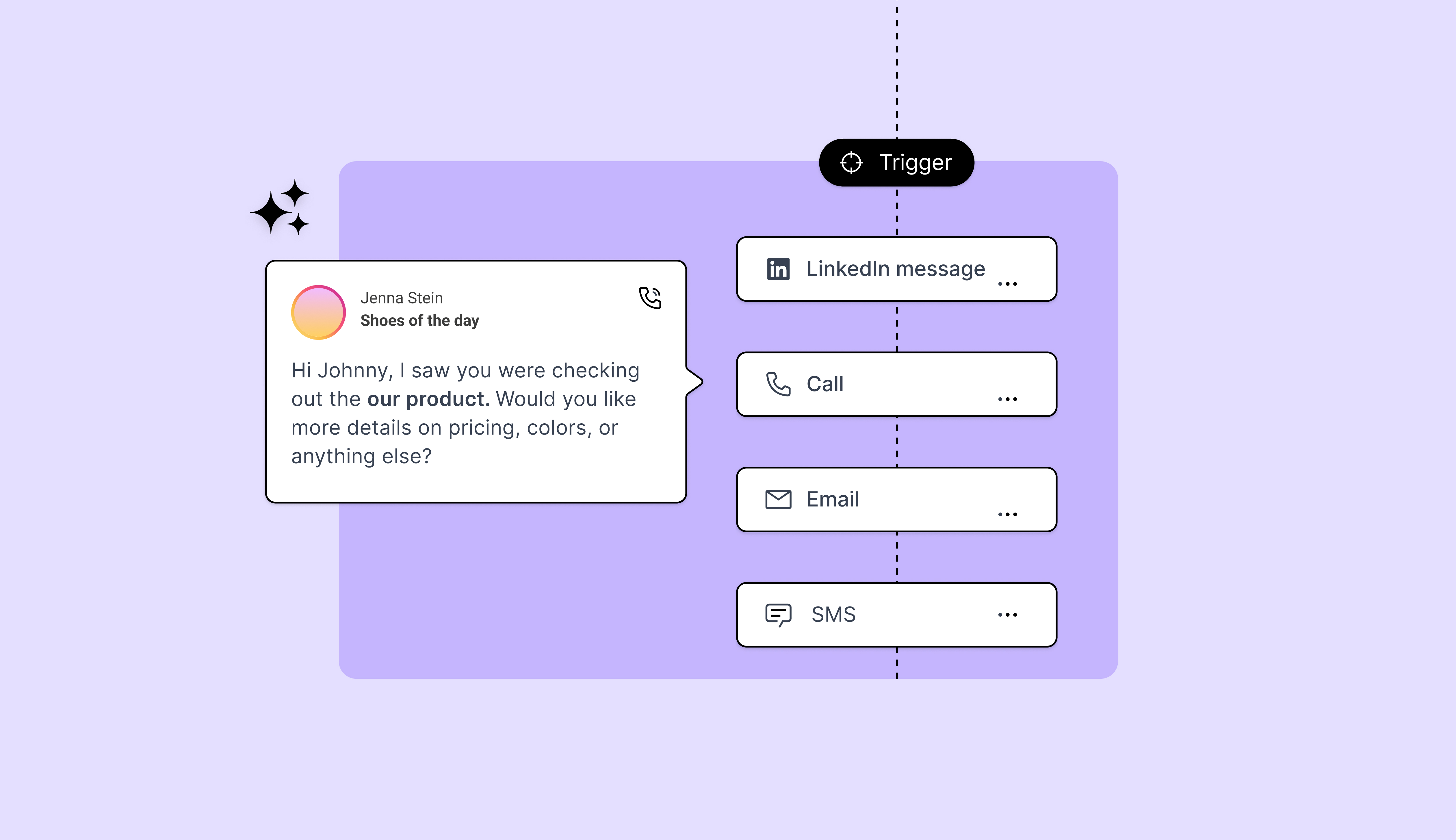
An AI SDR (Sales Development Representative) is an artificial intelligence system that automates prospecting, lead qualification, and outreach while maintaining human-level personalization. Unlike traditional sales tools that assist humans with individual tasks, an AI SDR owns the end-to-end workflow: identifying target accounts, researching prospects, drafting and sending outreach across email, LinkedIn, SMS, and calls, handling follow-ups, qualifying replies, and syncing activity back to the CRM. A human rep only steps in when a prospect is ready for a real conversation.
Modern AI SDRs like Alta's Katie draw on 50+ data sources to shape every touch. That's what lets the category deliver personalization at scale rather than just personalization on the ten accounts a rep has time to research manually.
AI SDR vs. traditional SDR tools vs. human SDRs
The three categories solve different problems and the distinctions matter when you're evaluating where to invest.
Speed. Traditional SDR tools (sequencers, dialers, data providers) make humans faster, usually by 10-30%. Human SDRs work at human speed, which means 50-80 personalized touches per day at best. AI SDRs run continuously at machine speed, which means thousands of fully personalized touches per week and inbound response in seconds rather than hours.
Personalization. Traditional tools rely on merge fields and templates. Humans produce the highest quality personalization on their best sequences but can't sustain that quality at volume. AI SDRs produce consistently personalized outreach across large prospect lists because personalization is computed per touch rather than written per touch.
Cost efficiency. A fully-loaded SDR in the US or Western Europe costs roughly $100,000-$150,000 per year. Traditional tools add tool-stack cost on top of that without reducing headcount. AI SDRs reduce the headcount side of that equation, typically generating 2-3x the pipeline per dollar spent compared to hiring the next human SDR.
Scalability. Traditional tools scale linearly with seats. Humans scale with hiring, ramp time, and management overhead. AI SDRs scale with workload configuration, which breaks the link between pipeline growth and headcount growth entirely.
When each wins. Traditional tools still have a role for teams that want to keep humans fully in the loop. Humans still win for complex qualification, relationship depth, and late-stage deal work. AI SDRs win for top-of-funnel coverage, inbound speed-to-lead, multi-channel execution at scale, and any motion where volume and personalization both matter.
Core AI SDR capabilities
The capabilities that define the category are specific and worth understanding before evaluating platforms.
Natural language processing for personalized messaging. AI SDRs use NLP to draft messages that reference real buyer context — recent funding events, job changes, tech stack signals, product launches — instead of inserting merge fields into templates.
Machine learning for lead scoring. Instead of ranking prospects on a handful of manually weighted criteria, AI SDRs score leads across 50+ data points, including firmographic fit, intent signals, behavioral history, and engagement patterns, and update scores in real time as new signals arrive.
Automated A/B testing and optimization. AI SDRs continuously test subject lines, message variants, channels, and cadences, routing more volume to what works. The optimization loop runs constantly rather than quarterly.
Integration capabilities. Modern AI SDRs maintain the CRM as the system of record, read CRM context to shape outreach decisions (deal stage, account owner, past wins), and write activity back in real time. The best platforms integrate at the decision layer, not just the logging layer.
AI SDR glossary: key terms
Prospect enrichment. The process of adding firmographic, technographic, and behavioral data to contact records so outreach can be targeted and personalized. AI SDRs perform enrichment continuously rather than at a point in time.
Sequence automation. The coordinated delivery of multi-touch outreach across email, LinkedIn, SMS, and calls on an adaptive cadence. AI-driven sequences adjust based on prospect behavior rather than running the same seven touches regardless of engagement.
Response analysis. The automatic classification and handling of replies, distinguishing positive intent from out-of-office responses, objections, and unsubscribes, and routing each to the right next action.
Conversion optimization. The ongoing process of tuning messaging, timing, channels, and targeting to lift the rate at which prospects convert through each funnel stage. AI SDRs perform this continuously; humans perform it at review cadences.
Real-world AI SDR implementation scenarios
The G2 recognition reflects the patterns we see most often across our customer base. Two scenarios capture where AI SDRs create the most impact in practice.
Scenario 1: SaaS team scaling outbound without hiring more SDRs
Challenge. A 50-person B2B SaaS company with two human SDRs and aggressive pipeline targets. Current outbound coverage capped at roughly 120 personalized touches per day across the team. Hiring more SDRs wasn't viable on current burn, and the team's existing sequencer was speeding up tasks but not changing the ceiling.
Solution. Deployed an AI SDR to own prospect research, enrichment, first-touch drafting, and multi-channel sequencing across email and LinkedIn. The two human SDRs shifted to live reply handling, qualification calls, and multi-threading. Messaging was trained on the team's top-performing sequences from the prior year.
Outcome. Daily personalized touch volume climbed into the thousands. Qualified meetings roughly tripled within the first quarter. Cost per qualified meeting dropped significantly because pipeline growth happened without headcount growth. The human SDRs reported spending substantially more time in live conversations and less time on list-building and follow-up admin.
Scenario 2: Enterprise team expanding coverage across regions and time zones
Challenge. An enterprise sales team running a mature outbound motion in their home region but struggling to cover new geographies. Target prospects in other time zones went hours without a first response. Coverage into non-English markets was patchy because the team didn't have dedicated reps for every language.
Solution. Deployed an AI SDR to run localized outreach across multiple time zones and languages, with messaging localized per market rather than translated. Inbound response handled automatically in seconds regardless of time of day. Regional AEs retained ownership of replies, qualifications, and meetings booked in their territories.
Outcome. Speed-to-lead dropped from hours to seconds across all regions. Coverage expanded into markets that had previously received near-zero dedicated outreach. Reply rates in non-English markets landed consistent with English-language performance. The team opened pipeline in new geographies without adding local headcount.
Why do customers choose Alta?
Rapid results that drive confidence
Businesses that add Alta to their sales engine gain clear and measurable outcomes within the first 60 days of implementation. Whether it's increasing outbound volume, improving lead qualification efficiency, or enhancing pipeline coverage, teams see meaningful gains quickly.
A user experience that drives adoption
Alta's clean, intuitive interface is a customer favorite that integrates seamlessly with your workflows. Unlike many enterprise tools that require heavy training and complex onboarding, Alta's straightforward design helps SDRs and sales teams get up and running with minimal friction.
Onboarding and support that go beyond expectations
Our onboarding process is designed to set you up for success from day one, with personalized implementation guidance and responsive support. Many G2 reviews highlight the Alta team's commitment to helping you maximize the platform's capabilities and drive ROI.
Building AI that sales teams actually want to use
At Alta, our mission has always been to develop AI solutions that augment sales professionals, not replace them. Recognition like this reflects the value our customers experience daily: a platform that accelerates sales development, enhances personalization at scale, and integrates into existing systems to drive better outcomes.
We're so grateful for this recognition, because the G2 High Performer status is more than just a badge, it's validation that our users see real results in their workflows and pipelines. It reinforces our commitment to continuous improvement as we create new features and capabilities to help sales organizations thrive.
Looking ahead
Thank you to our customers for their trust, feedback, and partnership. Every review shared on G2 helps us improve, prioritize what matters most, and build a product that truly serves your evolving needs.
As we continue expanding our capabilities, we stay focused on our goal, to make your sales team faster, smarter, and more effective, with AI that enhances human potential.
Frequently Asked Questions
AI sales agents go beyond traditional sales tools by acting like real teammates, not just automation software.
Alta’s top-performing AI sales agents, Katie and Alex, stand out by taking full ownership of sales tasks - from sending messages and making calls to booking meetings. They use real-time data from 50+ sources to decide who to reach, when to reach them, and what to say, ensuring precise targeting and higher conversion rates.
With 24/7 availability and real-time optimization, AI SDR tools like Katie and Alex ensure no lead slips through the cracks, even when your team is offline. As sales agents for 2025 and beyond, they help maximize efficiency, streamline workflows, and drive better sales outcomes.
AI SDRs improve sales processes by automating outreach, identifying and prioritizing high-intent leads, and optimizing engagement based on real-time data.
Alta’s AI SDR, Katie, stands out as a top-performing sales assistant designed to drive results. Katie streamlines prospecting using over 50+ data sources, from hiring trends to tech adoption and social signals. She crafts personalized email and LinkedIn outreach, fine-tuning messaging based on past performance and engagement. With real-time action and optimization, Katie instantly reacts to buyer signals, launching perfectly timed outreach and boosting conversion rates.
By leveraging the right AI SDR tools, like Katie, sales teams can reach the right prospects faster, maximize efficiency, and stay ahead in 2025’s competitive sales landscape.
AI SDRs use real-time data, automation, and prioritization to find and engage the right leads faster and more effectively than manual prospecting.
Alta’s top-performing AI sales assistant, Katie, excels at:
- Real-time lead discovery: Katie monitors 50+ data sources to identify high-intent prospects based on hiring trends, funding events, tech stack adoption, and more.
- Smart lead prioritization: She ranks and scores leads based on fit and buying intent, helping your team focus only on the most promising opportunities.
- Automated multi-channel outreach: Katie engages prospects through personalized emails and LinkedIn messages, ensuring fast follow-up and maximizing lead coverage without extra manual effort.
Using AI SDR tools like Katie, sales teams can build a stronger, more efficient pipeline and stay competitive in 2025’s evolving sales environment.
Alta offers a more data-driven approach by leveraging AI to analyze your data and identify the best ICP based on past successes. Unlike other tools like 11x, Artisan and others, Alta taps into over 50+ data sources to create hyper-personalized messages, targeting the right audience with precision. Alta also excels in generating lookalike audiences and offers more robust personalization through AI, ensuring higher engagement and better results from your outreach efforts.
AI sales assistants improve lead quality by continuously learning from engagement data such as replies, opens, and conversions. They analyze which types of prospects are more likely to respond positively and adjust targeting criteria accordingly. Over time, this reduces time spent on unqualified leads and increases efficiency for sales teams. These systems can also detect patterns in messaging performance and refine outreach strategies automatically. By integrating with CRM and data sources, they maintain updated prospect profiles and scoring models. The result is a progressively more accurate and efficient lead qualification process.
Companies adopting AI for outbound sales may initially face challenges related to data quality and system integration. Poor or incomplete data can limit the effectiveness of AI-driven personalization and targeting. Teams may also need time to adjust workflows and trust automated decision-making processes. Another common challenge is ensuring that messaging still feels human and authentic despite automation. Proper onboarding and training are essential to align the technology with business goals. With the right setup and iteration, these challenges typically diminish over time.
AI-driven personalization differs from traditional methods by operating at scale and in real time. Instead of manually researching each prospect, AI systems analyze large datasets to tailor messaging instantly. This allows sales teams to reach more prospects without sacrificing relevance. AI can incorporate signals such as recent company activity, job changes, or behavioral intent into messaging. Traditional personalization is often limited by time and human capacity, making it harder to scale effectively. AI enhances personalization by combining speed, data depth, and continuous optimization.